How to Measure Inseam – Complete Guide to Perfect Fit
How to Measure Inseam: Complete Guide
Getting the right inseam measurement ensures pants fit properly and look tailored. Whether shopping online or visiting a tailor, knowing how to measure inseam accurately prevents common fitting mistakes that lead to ill-fitting clothing.
The inseam measures the length of your inner leg from the crotch seam to your ankle bone. This single measurement determines how long pants should be and directly affects comfort, style, and overall appearance. Most people can complete this measurement in under two minutes with basic tools.
Beyond clothing, inseam measurements apply to bike sizing, athletic equipment selection, and custom tailoring. Understanding this measurement empowers you to make informed purchasing decisions and communicate effectively with tailors and retailers.
How Do I Measure My Inseam?
The most accurate inseam measurement comes from measuring your body directly. This method works best when you do not have well-fitting pants to reference, or when you want to verify sizing before purchasing new clothing.
1
Stand straight, barefoot
2
Tape from crotch to ankle
3
Use mirror or helper
4
Round to nearest half-inch
Key Insights
- Inseam affects fit more than waist measurement for determining pant length
- A 1-inch measurement error can dramatically change how pants stack or break at your shoes
- Bike inseam sizing prioritizes standover height for safety and control
- Measuring both legs reveals leg length discrepancies up to half an inch
- Rounding up ensures pants are never too short
- Hem preferences add 0 to 2 inches depending on desired break
| Category | Measurement Range |
|---|---|
| Men’s Average | 30–34 inches |
| Women’s Average | 28–32 inches |
| Short Height | Below 28 inches |
| Tall Height | Above 34 inches |
| Bike Fit Addition | Add 1 inch clearance |
| Hem Allowance | 0.5–2 inches depending on style |
Measuring Your Body Standing
Stand barefoot with feet shoulder-width apart and weight distributed evenly. Wear fitted pants or underwear so the measuring tape sits properly against your crotch area. Position the tape at the point where your legs meet, then run it straight down your inner leg to your ankle bone.
Keep the tape straight and follow the natural line of your inner leg. Record the measurement in inches, then repeat for your other leg. Some people have leg length differences up to half an inch; always use the longer measurement to ensure pants are not too short.
If measuring alone, stand against a wall for stability. Hold the tape at your crotch with one hand and let it fall straight down. Use a mirror or take a photo to read the measurement at your ankle bone accurately.
Without a Tape Measure
You can use string, yarn, or a long shoelace as an alternative. Hold one end at your crotch seam and let the string fall to your ankle bone. Remove the string and lay it flat against a ruler or yardstick to determine your measurement. This method works well when traveling or when a tape measure is unavailable.
Ask a friend to help while wearing your pants. A helper can ensure the tape stays perfectly vertical, eliminating the guesswork involved in solo measurements. Professional tailors always use this approach for precision alterations.
How to Measure Inseam on Pants
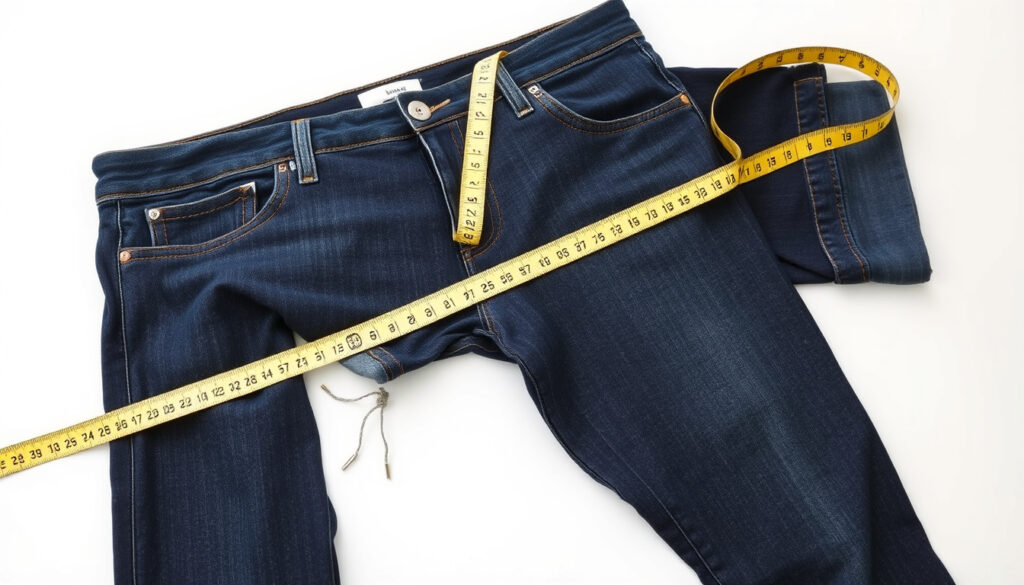
When you already own a pair of pants that fit perfectly, measuring the inseam on those pants provides a reliable reference for future purchases. Lay the pants flat on a table or floor with legs straight and aligned.
From an Existing Pair of Jeans
Smooth out wrinkles and ensure the fabric lies completely flat. Locate the crotch seam where the two leg panels meet in the middle of the garment. Run your measuring tape down the inside leg seam from this point to the bottom hem.
Round your measurement to the nearest inch. For example, 30.5 inches rounds to 31 inches. This rounded figure becomes your standard inseam size for ordering online or requesting alterations.
If your jeans have been hemmed or altered, this measurement reflects your ideal length for future purchases but may not match standard sizing charts. Altered pants cannot serve as reliable references for standard sizes.
Mark and Measure Method
An alternative approach uses pants that fit well but are too long. Put on pants that are typical of what you wear daily. Fold the cuff up to where the pant leg ends just above your shoes, with little to no break in the fabric.
Remove the pants and lay them flat. Measure the section you folded up. Subtract this folded measurement from the original inseam length to calculate your ideal inseam measurement.
What Is Inseam Measurement and Why Does It Matter?
The inseam is the measurement of the inside length of your leg, running from the crotch seam where the two legs of pants meet down to your ankle bone or the hem of your pants. This measurement determines how long your pants should be.
Inseam Versus Outseam
The inseam measures only the inner leg from crotch to ankle, while the outseam measures the full pants length from the waistband to the hem. The outseam is longer because it includes the rise, which is the distance from the waistband to the crotch.
When ordering pants online or consulting a tailor, always use your inseam measurement. Measuring the outer seam produces an incorrect, longer measurement that leads to pants that are too long. Understanding this distinction prevents ordering errors and fitting disappointments.
Your ankle bone measurement represents your “true inseam,” but you may want jeans to hit at different points depending on style preference. Some men prefer no break, where the hem sits at or slightly above the ankle bone. Others prefer a slight break, adding half an inch to one inch for a small fold at the shoe.
Inseam Sizing for Bikes and Clothing
Inseam measurement serves purposes beyond clothing. Cyclists use inseam measurements to determine proper bike frame size. The measurement helps ensure a bicycle frame is appropriately sized for your body, allowing proper leg extension and comfortable pedaling.
Applying Your Inseam to Bike Fit
For bike sizing, cyclists typically add approximately one inch of clearance to their body inseam measurement. This addition ensures adequate standover height when straddling the top tube. A proper fit prevents discomfort during long rides and reduces the risk of injury from improper leg positioning.
When selecting a bike, consult manufacturer sizing charts that correlate inseam length to frame size. Different bike styles, such as road bikes versus mountain bikes, may require slight adjustments to this basic calculation.
Hem Preferences for Different Styles
Traditional fits often include a full break, adding one to two inches for more stacking at the shoe. Contemporary slim fits may use no break for a clean, modern look. Business casual styles typically fall between these preferences.
When communicating with tailors, specify your desired break alongside your inseam measurement. These details ensure the finished product matches your expectations.
For online shopping, round up to the nearest inch to ensure pants are not too short. A slightly longer inseam can be hemmed, but a too-short inseam cannot be lengthened. This simple rule prevents costly returns.
Average Inseam Lengths and Size Charts
Most jeans are manufactured in two-inch increments, with common sizes including 28, 30, 32, 34, and 36 inches. Some premium brands offer one-inch increments for more precise fitting. Standard sizing typically ranges from 28 to 36 inches or longer for taller individuals.
Understanding where your measurement falls on this spectrum helps narrow down options when shopping. Taller individuals generally require inseams of 34 inches or longer, while shorter individuals typically need 28 inches or less.
What Tools Do I Need to Measure Inseam?
For the standard measuring method, you need a flexible measuring tape or soft tape measure, a flat surface, and optionally a helper for increased accuracy. The alternative method requires only string, yarn, or a long shoelace along with a ruler or yardstick.
Keep your measuring tape slack-free and straight. Angled or loose tape produces inaccurate readings. For best results, measure in the clothing you normally wear with pants, such as the underwear or fitted shorts you plan to use.
Certainty and Precision in Inseam Measurement
The standard inseam measurement method achieves approximately 99% accuracy when performed correctly with a tape measure. Having a helper present increases precision significantly, while solo measurements may vary by approximately half an inch depending on technique.
Measurement of inseam is a universal clothing standard with no controversy or regional variations. All major retailers and tailors use the same basic definition: the distance from the crotch seam to the hem or ankle bone. This consistency makes cross-referencing sizes straightforward.
What Remains Unclear
Some individuals may have leg length discrepancies that are not immediately apparent. These differences of up to half an inch may affect comfort in certain pant styles. Very athletic individuals with disproportionate muscle development may find standard charts less accurate.
Understanding and Applying Inseam Measurement
The inseam measurement directly impacts how pants fit, hang, and complement your physique. A correct inseam creates a clean line from waist to ankle, while an incorrect inseam creates bunching, dragging, or an incomplete appearance.
Professional tailors rely on inseam measurements to create custom clothing. Online retailers use inseam to size their products appropriately. Understanding this measurement empowers you to shop confidently and communicate clearly with anyone involved in clothing selection or alteration.
Take time to measure carefully. A little precision ensures pants fit perfectly and hang properly from crotch to ankle. Once you know your inseam, you can apply this knowledge to every clothing purchase for consistent, satisfactory results.
Expert Recommendations
- Always measure while standing straight with proper posture
- Keep the measuring tape straight and not angled or loose
- Take extra care with measurement; precision ensures perfect fit
- Measure in the clothing you will normally wear with the pants
- Do not rely on estimates; taking 45 seconds to measure accurately saves time and money
Summary
Measuring your inseam correctly requires standing straight, placing the tape at your crotch, running it down your inner leg to your ankle bone, and rounding to the nearest half-inch. For pants you already own, lay them flat and measure along the inner seam from crotch to hem. Always use your inseam rather than outseam when ordering or tailoring, and round up when shopping online. Understanding this measurement transforms how you approach clothing purchases and alterations. For more guidance on professional development resources and practical skills, explore additional resources.
Frequently Asked Questions
What tools do I need to measure inseam?
You need a flexible measuring tape, or alternatively string and a ruler. A helper improves accuracy but you can measure alone by standing against a wall and using a mirror to read the tape at your ankle.
How do I measure my inseam without a tape measure?
Use string, yarn, or a shoelace. Hold one end at your crotch and let it fall to your ankle bone. Lay the string flat against a ruler to measure the length.
What is the difference between inseam and outseam?
The inseam measures the inner leg from crotch to ankle. The outseam measures the full length from waistband to hem, including the rise. Always use inseam for pant sizing.
How to measure inseam for a bike?
Measure your body inseam as usual, then add approximately one inch for clearance. This ensures proper standover height when straddling the bike frame.
What is the average inseam length?
Men average 30 to 34 inches. Women average 28 to 32 inches. Short heights typically fall below 28 inches, while tall heights exceed 34 inches.
How to read an inseam size chart?
Locate your measured inseam on the chart. Most brands offer two-inch increments. Round up to the nearest standard size to ensure pants are not too short.
What are common mistakes when measuring inseam?
Measuring from the waist instead of the crotch, measuring the outer seam, using loose clothing, guessing instead of measuring, and using hemmed jeans as reference all produce inaccurate results.
More related posts
 Who Will Be the Next Pope – Candidates, Conclave Rules and Timeline
 $2000 Federal Payment Guide: Fact-Checking Trump’s Promise
 Cast of Avatar 3: Full List for Fire and Ash
 The Seven Deadly Sins: List, Order, Meanings & Virtues
 Can You Get Pregnant When You’re Not Ovulating? Facts
 Detroit Lions vs Bengals Match Player Stats & Recap
 Can Dogs Eat Peas – Safety, Benefits, Risks and Feeding Guide
 Best Airline Credit Card 2026: Top Picks and Expert Tips
