How to Unclog a Sink: Fast DIY Methods That Work
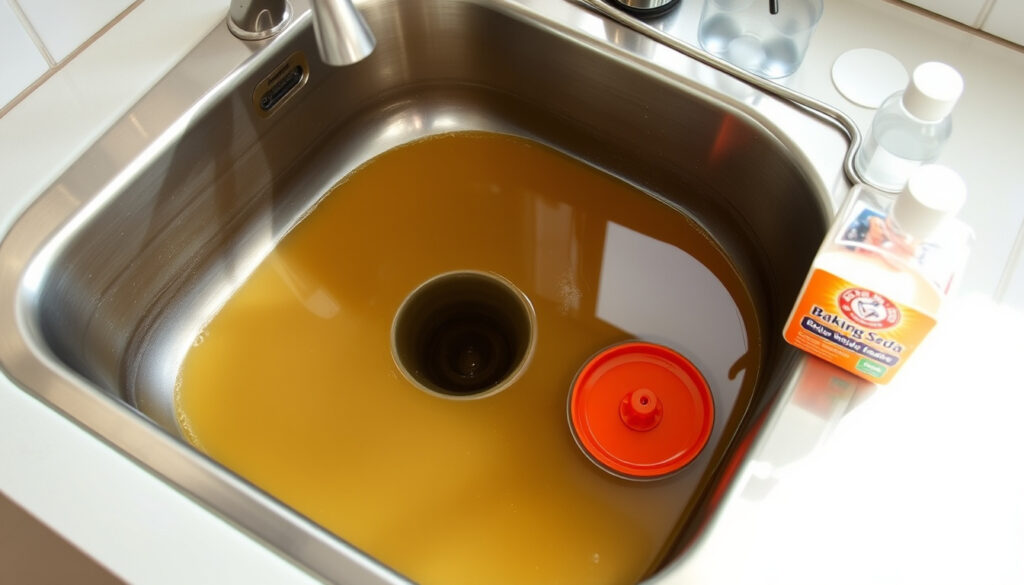
There’s that moment when you turn on the faucet and the water just sits there, rising like a slow tide. About 47% of household drain clogs are caused by grease, according to energy company ATCO Energy, so the right approach depends on what’s blocking your pipe.
Average DIY success rate: 90% with baking soda and vinegar (Liquid-Plumr) ·
Plumber callout fee: $150–$400 (Dan’s Drain Services) ·
Household drain clogs caused by grease: 47% (ATCO Energy)
Quick snapshot
- Safe for metal pipes (Meticulous Plumbing)
- Melts grease (ATCO Energy)
- Use within 30 seconds (Meticulous Plumbing)
- Effervescent clean (The Home Depot)
- Wait 30 minutes (Liquid-Plumr)
- Flush with hot water (The Home Depot)
- Hair clogs (Balkan Plumbing)
- Hand-crank (Balkan Plumbing)
- No chemicals needed (Balkan Plumbing)
Three facts about sink clogs, one pattern: the cause dictates the cure.
| Fact | Detail |
|---|---|
| Most common kitchen clog | Grease and food particles (ATCO Energy) |
| Bathroom sink clog cause | Hair and soap scum (Lowe’s) |
| Plumber hourly rate | $75–$150 (Dan’s Drain Services) |
| Baking soda quantity | 1 cup (The Home Depot) |
| White vinegar quantity | 1 cup (The Home Depot) |
| Boiling water safe for? | Metal pipes only; damages PVC above 140°F (Meticulous Plumbing) |
| Drain snake effective on | Hair clogs (Balkan Plumbing) |
| Baking soda + vinegar limits | Not effective on mineral buildup (AAPL Plumbing) |
The implication: for organic clogs (grease, hair, soap), DIY methods work well, but mineral scale requires mechanical or chemical intervention.
What is the fastest way to unclog a sink?
Boiling water method
- Heat water to just below boiling – avoid a rolling boil if you have PVC pipes. (Meticulous Plumbing)
- Pour directly into the drain in two or three stages, letting each batch work for 5 seconds.
- Best for grease clogs in metal pipes.
Baking soda and vinegar mix
- Remove standing water first. (ATCO Energy)
- Pour 1 cup of baking soda, then 1 cup of white vinegar. Cover the drain immediately. (The Home Depot)
- Wait 15–30 minutes, then flush with hot tap water. (Liquid-Plumr)
Plunger technique
- Block the sink overflow with a wet cloth to create a seal. (Lowe’s)
- Place the plunger cup over the drain and pump vigorously 5–10 times.
- Lift quickly to break the seal – the pressure difference often dislodges the clog.
What this means: for a grease clog in a metal pipe, boiling water is fastest. For organic clogs of unknown composition, the baking soda and vinegar method is the safest first attempt. The plunger works fastest when you have a good seal and a P-trap that isn’t fully blocked.
The average DIY homeowner faces a trade-off: speed vs. safety. Boiling water is fast but risky for PVC. Baking soda and vinegar is slower but safe for all modern plumbing – and it works well on organic clogs like grease and hair.
What can I pour down the sink to unblock it?
Household ingredients
- Baking soda and salt: safe and abrasive. (ATCO Energy)
- White vinegar: reacts with baking soda to create foaming action that loosens debris. (The Home Depot)
- Hot tap water: flushes dissolved material.
Commercial drain cleaners
- Products like Liquid-Plumr are designed for tougher clogs. (Liquid-Plumr)
- They contain chemicals that can generate heat and dissolve organic matter.
- Always follow label instructions – overuse can damage pipes.
Avoided substances like grease
- Never pour cooking oil or grease down the sink – it solidifies in pipes. (ATCO Energy)
- Coffee grounds and starchy foods also contribute to buildup.
The catch: household ingredients are safe and cheap but work only on minor clogs. Commercial cleaners are more aggressive but carry a risk of pipe damage if used incorrectly.
How to unblock a sink without a plunger?
Baking soda method
- Follow the same baking soda and vinegar steps – no plunger required. (The Home Depot)
- The carbon dioxide gas pressure can push clogs through.
Drain snake
- Insert the snake into the drain and crank to break up hair or debris. (Balkan Plumbing)
- Works especially well on bathroom sink clogs caused by hair.
Hot water flush
- Use hot tap water (not boiling) to melt grease. (ATCO Energy)
- Repeat several times if necessary.
Why this matters: not everyone owns a plunger. These methods offer effective alternatives using common household items or a cheap drain snake.
What do I do if I can’t clear the clog?
When to try again
- If standing water remains after the first attempt, repeat the baking soda and vinegar method. (ATCO Energy)
- Sometimes a second application dislodges what the first loosened.
Signs of deeper blockage
- Multiple fixtures backing up at once indicates a main line issue. (Dan’s Drain Services)
- Gurgling sounds or slow drainage in other sinks also suggest a deeper clog.
Calling a plumber
- If DIY methods have failed after three attempts, it’s time to call a professional. (Dan’s Drain Services)
- Expect to pay $75–$150 per hour – often less than the cost of repeated chemical treatments. (Dan’s Drain Services)
The trade-off: persistent DIY attempts can waste time and money. A plumber can diagnose the root cause and prevent recurring clogs.
If you’ve tried baking soda and vinegar, a plunger, and a drain snake without success, the clog may be deep in your main line. Continuing to pour chemicals down the drain risks pipe damage and delays the professional fix you need.
Should you pour boiling water down the sink?
Metal vs PVC
- Boiling water is safe for metal pipes (steel, copper) but can soften PVC pipes above 140°F. (Meticulous Plumbing)
- If you have PVC, use hot tap water instead.
Grease risks
- Boiling water melts grease in metal pipes, but if the pipe is PVC, the grease can re-solidify further down. (ATCO Energy)
- Always dispose of cooking grease in a container, not down the sink.
Safety tip
- For any pipe material, start with hot tap water and increase temperature gradually.
- Never pour boiling water into a completely blocked drain – it can cause splashing and burns.
The pattern: boiling water is a powerful tool when used correctly. Know your pipe material, and reserve boiling water for metal pipes only.
Will baking soda and vinegar dissolve a blocked drain?
Chemical reaction
- The acetic acid in vinegar reacts with sodium bicarbonate to produce carbon dioxide gas.
- This creates pressure that can dislodge soft clogs like grease or soap scum.
Effectiveness
- Works well on organic clogs (grease, hair, food particles).
- Most effective on partial clogs, not complete blockages.
Limitations
- Not effective on mineral buildup or hard scale. (AAPL Plumbing)
- Some plumbers argue it only displaces buildup rather than removing it.
The verdict: baking soda and vinegar is a safe first attempt but has limits. For mineral deposits or complete blockages, mechanical tools or professional help are required.
Upsides
- Low cost – most ingredients are in your pantry
- Safe for modern plumbing when used correctly (Meticulous Plumbing)
- No chemical fumes or environmental damage
- Works well on organic clogs (grease, hair, soap) (The Home Depot)
Downsides
- Not effective on mineral buildup or metal obstructions (AAPL Plumbing)
- Takes 30+ minutes compared to a snake’s instant action
- May need multiple applications for tough clogs
- Some plumbers argue it doesn’t remove buildup – it only displaces it (AAPL Plumbing)
Confirmed vs uncertain: what the evidence says
Confirmed facts
- Baking soda + vinegar works on organic clogs (The Home Depot)
- Boiling water damages PVC pipes (Meticulous Plumbing)
- Commercial drain cleaners like Liquid-Plumr are stronger but can harm pipes if overused (Liquid-Plumr)
What’s unclear
- Exact success rate for the salt and baking soda method (ATCO Energy)
- Whether dish soap (Fairy Liquid) truly unblocks drains or just helps break surface tension
- How long you should let baking soda and vinegar sit – sources vary from 15 minutes to overnight (Simple Green)
- Plunger effective on grease clogs (Lowe’s)
- Drain snake clears hair clogs (Balkan Plumbing)
Expert perspectives on unclogging a sink
“Salt and baking soda will help clear the drain without harsh chemicals, but it takes several hours to work.”
– ATCO Energy, blog post
“Baking soda and vinegar can help clean drains naturally. For tougher clogs, you may need a stronger product.”
– Liquid-Plumr, DIY guide
“Most plumbers do not recommend baking soda and vinegar for real drain problems because it does not actually remove buildup.”
– AAPL Plumbing, article
“A completely clogged drain will require a professional plumber. Vinegar and baking soda may help a partially clogged drain.”
– Dan’s Drain Services, blog
For the average homeowner, the choice is clear: start with baking soda and vinegar for organic clogs, escalate to a plunger or snake, and call a plumber if nothing moves after three attempts. Pouring boiling water into PVC pipes risks damage, and commercial chemicals should be a last resort.
If your sink is still draining slowly after trying these methods, you might find the techniques for unblocking a sink equally effective.
Frequently asked questions
How long should you let baking soda and vinegar sit in a drain?
Most sources recommend 15–30 minutes. Some say up to an hour for tougher clogs. The key is to keep the drain covered so the foam stays inside the pipe (The Home Depot).
Can I pour bleach down a sink to unclog it?
Bleach can kill odor-causing bacteria but won’t dissolve organic clogs. Use baking soda and vinegar instead – bleach can damage pipes if mixed with other chemicals (Liquid-Plumr).
Is a plunger safe for all sink types?
Yes, but you must block the overflow opening to create a proper seal. Use a cup plunger, not a toilet flange plunger (Lowe’s).
What causes a sink to drain slowly?
Usually a partial clog from grease, hair, or soap scum. Regular maintenance with hot water and baking soda can prevent it from becoming a full blockage (Apollo Home).
Does Drano work on standing water?
Drano is formulated for standing water, but it’s caustic. Follow the label carefully – it can heat up and damage PVC if left too long (Liquid-Plumr).
Can I use a wire hanger to unclog a sink?
In a pinch, yes. Straighten a coat hanger and create a small hook at the end to fish out hair clogs. Be gentle to avoid scratching the pipe (Balkan Plumbing).
How often should you clean sink drains?
Monthly maintenance with hot water and baking soda helps prevent buildup. If you have a garbage disposal, run ice cubes and citrus peels weekly (Apollo Home).
Why does my sink smell even after unclogging?
Bacteria and biofilm can linger in the P-trap. Pour a cup of white vinegar or a specialty drain cleaner overnight to neutralize odors (Simple Green).
For more home maintenance guides, check out How to Paint a Room: Step-by-Step Guide for Beginners and Electric Fireplace TV Stands: What ‘Best Rated’ Really Means.
More related posts
 She’s the Man Cast: Full List of Actors and Characters (2006)
 Ouran Highschool Host Club: Ratings, Haruhi & LGBT Facts
 Wells Fargo Active Cash Card Review 2025
 What Is Income Tax? Meaning, Calculation & Guide for Ireland 2025
 Cluster B Personality Disorders – Types, Symptoms, Causes, Treatment
 How to Learn English Fast – 5 Proven Strategies for Fluency
 AMD Ryzen 7 7800X3D – Gaming Review and Benchmarks
 New York I Love You: Review of the 2008 Anthology Film
