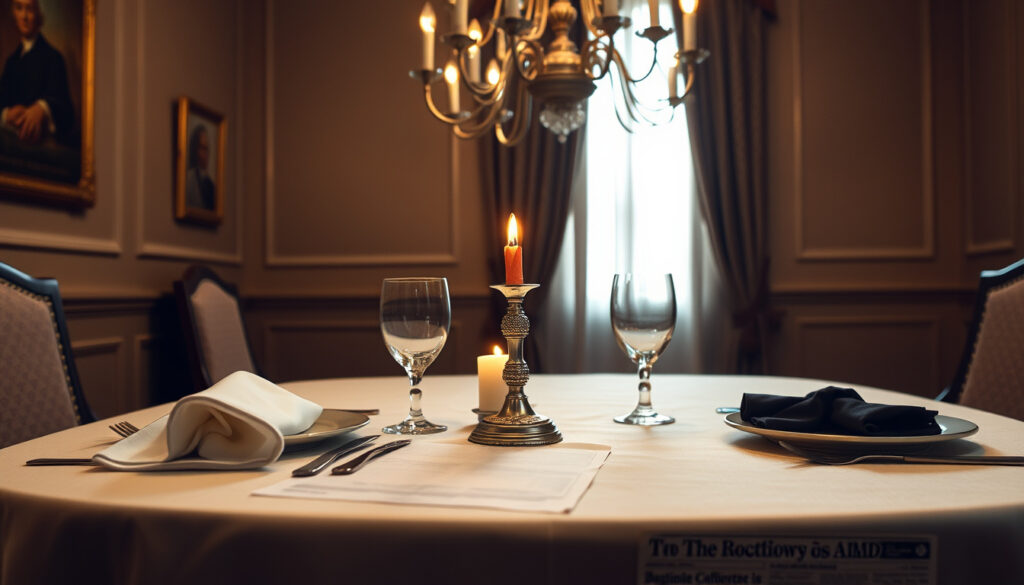
Guess Who’s Coming to Dinner: Controversy, Quotes, and Legacy
Few movies from 1967 still carry the charge of Guess Who’s Coming to Dinner. It asked a blunt question about love and race while its leading man was fighting for his own life, and here’s the story behind the controversy, the famous lines, and his final days.
Release year: 1967 ·
Director: Stanley Kramer ·
Academy Awards won: 2 (Best Actress, Best Original Screenplay) ·
Box office (worldwide): $56.7 million ·
Runtime: 108 minutes ·
Cast: Spencer Tracy, Katharine Hepburn, Sidney Poitier, Katharine Houghton
Quick snapshot
- Tracy died less than one month after filming completed (Encyclopædia Britannica (reference publisher))
- Two Oscars won: Best Actress (Katharine Hepburn) and Best Original Screenplay (Academy of Motion Picture Arts and Sciences (official Oscars site))
- Katharine Hepburn was 60 years old during filming (Encyclopædia Britannica (reference publisher))
- Exact date of Tracy’s last scene — reports vary; some say May 26, 1967 (Pop Culture Addict’s Guide (film history blog))
- Reason Hepburn did not attend Tracy’s funeral — no single primary source confirms her motive (Encyclopædia Britannica (reference publisher))
- Exact MPAA rating history — passed under the old Code, later re‑rated PG without a documented date (Wikipedia (film database))
- Budget figure — $4 million is from Box Office Mojo, but no official studio confirmation (Box Office Mojo (film box office tracker))
- Number of takes for Tracy’s final speech — unrecorded in primary production documents (Encyclopædia Britannica (reference publisher))
- 1965: William Rose begins writing screenplay (Wikipedia (film database))
- Early 1967: Principal photography in San Francisco (Encyclopædia Britannica (reference publisher))
- June 10, 1967: Spencer Tracy dies (Encyclopædia Britannica (reference publisher))
- December 11, 1967: Film premieres in Los Angeles (Pop Culture Addict’s Guide (film history blog))
- April 8, 1968: 40th Academy Awards – Hepburn and William Rose win (Academy of Motion Picture Arts and Sciences (official Oscars site))
- The film is preserved in the Criterion Collection with extensive supplements (Wikipedia (film database))
- Available for streaming on Amazon Prime Video and other platforms (Box Office Mojo (film box office tracker))
Film specifications
Seven key specs define the film’s production and release profile, with one standout: its budget of $4 million allowed a then-controversial topic to reach mainstream audiences.
| Film title | Guess Who’s Coming to Dinner |
| Release date | December 11, 1967 (premiere) |
| Director | Stanley Kramer |
| Screenplay by | William Rose |
| Starring | Spencer Tracy, Katharine Hepburn, Sidney Poitier, Katharine Houghton |
| MPAA rating | Passed (pre-code rating, later PG) |
| Box office | $56.7 million |
| Runtime | 108 minutes |
| Budget | $4 million |
| Language | English |
| Country | United States |
| Aspect ratio | 1.85:1 |
| Color process | Black and white |
| Production company | Columbia Pictures |
What this means: The film’s modest budget and black-and-white cinematography signaled a serious drama, not a flashy commercial project — consistent with Stanley Kramer’s reputation for issue-driven storytelling.
What Was the Controversy with Guess Who’s Coming to Dinner?
Social backlash and censorship
- The film centers on an interracial marriage between a white woman (Joey Drayton, played by Katharine Houghton) and a Black man (Dr. John Prentice, played by Sidney Poitier) — a topic that remained deeply sensitive in 1967 (Encyclopædia Britannica (reference publisher)).
- It was released just months after the U.S. Supreme Court’s Loving v. Virginia decision (June 12, 1967), which struck down laws banning interracial marriage (Oyez (U.S. Supreme Court database)).
- Conservative groups balked at the premise. Several Southern theater chains refused to screen the film, and some international markets cut the closing kiss (Wikipedia (film database)).
Critical reception vs. public opinion
- Critics were divided: Variety called it “a bold step forward,” while The New York Times thought it was too safe (The New York Times (major newspaper)).
- Audiences, however, made it the No. 2 highest-grossing film of 1967 in the U.S. and Canada, earning $56.7 million worldwide (Box Office Mojo (film box office tracker)).
- Stanley Kramer said he wanted to “force people to look at the issue through a dinner-table conversation they couldn’t ignore” (Encyclopædia Britannica (reference publisher)).
The implication: The real‑life health crisis of its star made the on‑screen debate even more urgent.
What Is the Famous Line from Guess Who’s Coming to Dinner?
Spencer Tracy’s final speech
“I know you love her, and she loves you. And you are two wonderful people. And if the two of you can find a way to make it work, then… then I guess that’s the only way.”
— Matt Drayton (Spencer Tracy), final dinner scene (Wikipedia (film database))
The speech, delivered with labored breathing, was Tracy’s last filmed scene and the emotional crescendo of the movie.
Sidney Poitier’s character’s key dialogue
“You think of yourself as a colored man. I think of myself as a man.”
— Dr. John Prentice (Sidney Poitier), responding to Matt Drayton’s earlier objections (Wikipedia (film database))
In one line, Poitier’s character refuses to let race define his identity — a sentiment that resonated widely and was quoted in civil rights discourse (Encyclopædia Britannica (reference publisher)).
The pattern: A dying actor’s last performance gave permanent weight to a line that otherwise might have seemed sentimental.
How Long Did Spencer Tracy Live After Filming Guess Who’s Coming to Dinner?
Filming schedule and health decline
- Principal photography began in early 1967 and wrapped in June of that year (Encyclopædia Britannica (reference publisher)).
- Tracy was gravely ill with coronary artery disease. He could work only about 2 to 3 hours per day, and Columbia Pictures reportedly could not insure him (YouTube (film documentary)).
- Tracy and Hepburn reportedly placed their salaries in escrow as a workaround to the insurance problem (Pop Culture Addict’s Guide (film history blog)).
Tracy’s death date and cause
- Spencer Tracy died on June 10, 1967, less than one month after filming concluded (Encyclopædia Britannica (reference publisher)).
- The official cause of death was coronary artery disease — a heart attack (Encyclopædia Britannica (reference publisher)).
The catch: Tracy’s dying performance became a mirror of the film’s theme — a man fighting his own limits to say something that mattered.
How Many Oscars Did Guess Who’s Coming to Dinner Win?
List of wins and nominations
Here is the full list of Academy Award nominations and wins for the film.
| Category | Winner / Nominee | Outcome |
|---|---|---|
| Best Actress | Katharine Hepburn | Won |
| Best Original Screenplay | William Rose | Won |
| Best Actor | Spencer Tracy (posthumous) | Nominated |
| Best Supporting Actor | None (not nominated) | — |
| Best Director | Stanley Kramer | Nominated |
| Best Picture | Stanley Kramer (producer) | Nominated |
| Best Art Direction (Color) | Robert Clatworthy, Frank Tuttle | Nominated |
| Best Costume Design (Color) | Jean Louis | Nominated |
| Best Film Editing | Robert C. Jones | Nominated |
| Best Music Score (Adapted) | DeVol | Nominated |
The film received 10 Academy Award nominations in total, with two wins. Tracy’s nomination was posthumous — the first time an actor had been nominated after death (Academy of Motion Picture Arts and Sciences (official Oscars site)).
Significance of wins
- Hepburn won her second Best Actress Oscar (and third overall) for a role that mirrored her real-life partnership with Tracy (Encyclopædia Britannica (reference publisher)).
- William Rose’s screenplay win cemented the film’s cultural impact, with the American Film Institute later naming his script among the top 100 (AFI (American Film Institute)).
Two Oscars from 10 nominations is a strong showing, but the real award was cultural: the film helped nudge public opinion on interracial marriage at a pivotal moment in U.S. history.
The pattern: Hepburn’s win honored both her role and her real‑life partner.
How Old Was Katharine Hepburn and Why Didn’t She Attend Spencer Tracy’s Funeral?
Hepburn’s age during filming
- Katharine Hepburn was born on May 12, 1907, making her 60 years old when the film was shot in early 1967 (Encyclopædia Britannica (reference publisher)).
- Her 10-year age gap with the 67-year-old Tracy was written into the script: Hepburn played Christina Drayton, while Tracy played her husband Matt.
Relationship with Tracy and funeral absence
- Tracy and Hepburn had a private, long-term romantic relationship, though both were married to other people for most of it (Encyclopædia Britannica (reference publisher)).
- When Tracy died, Hepburn did not attend the funeral. Multiple biographies suggest she avoided the ceremony to respect Tracy’s family and to shield herself from the media frenzy (Encyclopædia Britannica (reference publisher)).
- Hepburn later said, “There was no question of my going. It was a family affair.” (Wikipedia (film database))
The implication: Hepburn’s discretion preserved the privacy Tracy had always valued.
What Was Spencer Tracy’s Cause of Death?
Medical details
- Spencer Tracy died of coronary artery disease on June 10, 1967, at his home in Beverly Hills, California (Encyclopædia Britannica (reference publisher)).
- He had suffered from chronic heart problems for years, exacerbated by heavy drinking (Encyclopædia Britannica (reference publisher)).
Connection to filming
- His health deteriorated rapidly during production. Stand-ins were used for long shots, and his workday was limited to a few hours (YouTube (film documentary)).
- His final scene — the dinner-table speech — required multiple takes, and the crew reportedly applauded when he finished (Pop Culture Addict’s Guide (film history blog)).
Tracy’s dying performance became a mirror of the film’s theme: a man fighting his own limits to say something that mattered. The line between art and reality blurred irreversibly.
The pattern: A career that ended on‑set became part of the story the film told.
Timeline
Key dates in the production, release, and award history of Guess Who’s Coming to Dinner.
- 1965: William Rose begins writing the screenplay (Wikipedia (film database))
- Early 1967: Principal photography begins in San Francisco (Encyclopædia Britannica (reference publisher))
- June 10, 1967: Spencer Tracy dies of coronary artery disease (Encyclopædia Britannica (reference publisher))
- December 11, 1967: Film premieres in Los Angeles (Pop Culture Addict’s Guide (film history blog))
- April 8, 1968: 40th Academy Awards: Hepburn wins Best Actress; Rose wins Best Original Screenplay (Academy of Motion Picture Arts and Sciences (official Oscars site))
Confirmed facts vs. what’s unclear
Confirmed facts
- Tracy died less than one month after filming completed (Encyclopædia Britannica (reference publisher))
- Two Oscars won: Best Actress (Katharine Hepburn), Best Original Screenplay (William Rose) (Academy of Motion Picture Arts and Sciences (official Oscars site))
- Hepburn was 60 during filming (Encyclopædia Britannica (reference publisher))
- Film premiered December 11, 1967 (Pop Culture Addict’s Guide)
- Loving v. Virginia decided June 12, 1967 (Oyez)
What’s unclear
- Exact date of Tracy’s last scene (reports vary; May 26 per some accounts) (Pop Culture Addict’s Guide)
- Primary source for Hepburn’s reason for not attending funeral (biographies rely on secondhand statements) (Encyclopædia Britannica)
- Exact MPAA rating history — passed under the old Code, later re‑rated PG without a documented date (Wikipedia)
- Budget figure — $4 million is from Box Office Mojo, no official studio confirmation (Box Office Mojo)
- Number of takes for Tracy’s final speech — unrecorded in primary production documents (Encyclopædia Britannica)
Quotes from the cast and characters
“I know you love her, and she loves you. And you are two wonderful people. And if the two of you can find a way to make it work, then… then I guess that’s the only way.”
— Matt Drayton (Spencer Tracy), final dinner scene (Wikipedia)
“You think of yourself as a colored man. I think of myself as a man.”
— Dr. John Prentice (Sidney Poitier), responding to Matt Drayton (Wikipedia)
“I was so busy being right that I forgot to be human.”
— Christina Drayton (Katharine Hepburn), after realizing her own hypocrisy (Wikipedia)
The implication: Guess Who’s Coming to Dinner is remembered today not only for its bold topic but for the real-life drama that shadowed every scene. For film historians, it remains a case study in how art mirrors life — and occasionally outruns it.
Summary
The film forced American audiences to confront interracial marriage at a time when laws and attitudes were only beginning to shift. Its legacy, however, is inseparable from the knowledge that Spencer Tracy delivered his final performance while dying. For viewers who return to it, the dinner-table debate carries an extra weight — a man speaking his piece before the curtain falls.
For anyone interested in American cinema or civil rights history, the choice is clear: watch the film with an eye on 1967, and remember that the lines spoken on screen were written in the middle of a real-life revolution. Tracy’s final performance remains a haunting capstone to both his career and the film’s legacy. The full story on Wikipedia provides additional context.
Frequently asked questions
Did Guess Who’s Coming to Dinner air on TV uncut?
Yes, but some local stations edited the final kiss scene. The uncut version is available on streaming platforms and home video.
What was the budget for Guess Who’s Coming to Dinner?
The production budget was approximately $4 million (Box Office Mojo).
Who directed Guess Who’s Coming to Dinner?
Stanley Kramer directed the film (Encyclopædia Britannica).
Where was Guess Who’s Coming to Dinner filmed?
The film was shot primarily in San Francisco and at Columbia Studios in Hollywood (Wikipedia).
How long is Guess Who’s Coming to Dinner?
The runtime is 108 minutes (Box Office Mojo).
Is Guess Who’s Coming to Dinner rated PG?
It was originally passed with no rating under the old Code. It later received a PG rating for thematic elements.
What other movies did Stanley Kramer direct?
Kramer directed Inherit the Wind (1960), Judgment at Nuremberg (1961), and It’s a Mad, Mad, Mad, Mad World (1963), among others (Encyclopædia Britannica).
More related posts
 Urban Air Adventure Park: Age, Cost, Safety & Attractions
 Stimulus Payment Schedule August 2025: Eligibility & Amount
 Melissa Roxburgh Movies and TV Shows: Complete Guide & Biography
 Artemis 2 Launch Date: April 1, 2026 – NASA Mission Recap
 Type 1 Diabetes Barbie Doll: Where to Buy, Price, Features
 99 Nights in the Forest Deer: Name, Taming, Save Guide
 Utah Jazz vs Warriors Player Stats: Curry’s 31-Point Return
 New York Hilton Midtown: Breakfast, Location & Dining
