What Helps with Constipation? Fast Relief Tips
Few things are as frustrating as feeling blocked up and not knowing what to do. Whether you’re dealing with occasional constipation or a more persistent issue, the good news is that there are evidence-backed ways to find relief quickly.
Daily fiber recommendation (women): 25 g ·
Daily fiber recommendation (men): 38 g ·
Daily fluid intake recommendation: 1.5–2 L ·
Adults with chronic constipation: ~16%
Quick snapshot
- Drink warm water or prune juice (Temple Health)
- Use an over-the-counter suppository (ASCRS)
- Gentle abdominal massage (Temple Health)
- Increase fiber gradually to 25–38 g/day (AAFP)
- Eat fruits with sorbitol: prunes, apples, grapes (Houston Methodist)
- Stay hydrated with 1.5–2 L of water daily (Temple Health)
- Regular exercise (Houston Methodist)
- Consistent meal times (PubMed Central)
- Limit alcohol and caffeine (Temple Health)
- No bowel movement for 3+ days (AAFP)
- Severe abdominal pain or vomiting (ASCRS)
- Blood in stool (Houston Methodist)
Five key facts summarize the clinical picture of constipation and its management.
| Fact | Value |
|---|---|
| Definition | Constipation is defined as having fewer than three bowel movements per week, with stools that are hard, dry, or difficult to pass. |
| Prevalence | Approximately 16% of adults worldwide experience chronic constipation; it is more common in women and older adults. (AAFP) |
| Fiber Goal | Adults should aim for 25–38 grams of dietary fiber per day, according to national guidelines. (AAFP) |
| Hydration | Drinking 1.5–2 liters of fluid daily helps soften stools. Prune juice is particularly effective due to its sorbitol content. (Temple Health) |
| Alarm Symptoms | Severe pain, vomiting, inability to pass gas, or blood in stool may indicate a bowel obstruction and require emergency care. (ASCRS) |
How to relieve constipation quickly?
What relieves constipation in 30 minutes?
- Warm liquids (e.g., warm water, herbal tea) can stimulate the gastrocolic reflex within 30 minutes. (Temple Health)
- A cup of coffee may also trigger a bowel movement in some people, though effects vary. (Houston Methodist)
- Prune juice (120–240 mL) contains sorbitol, which draws water into the colon and can produce results within 30–60 minutes. (Temple Health)
What will flush constipation quickly?
- Osmotic laxatives like polyethylene glycol (MiraLAX) are considered first-line medical therapy and work within 24–48 hours. (ASCRS)
- Stimulant laxatives such as bisacodyl (Dulcolax) can produce a bowel movement in 6–12 hours but are recommended for short-term use only. (Houston Methodist)
- A saline enema can provide relief in 5–15 minutes but should be used sparingly. (ASCRS)
How to relieve constipation on the toilet immediately
- Use a footstool so your knees are above your hips—this mimics a squatting position and straightens the rectoanal angle. (Temple Health)
- Lean forward and place your elbows on your knees to increase intra-abdominal pressure.
- Breathe diaphragmatically (belly breaths) rather than holding your breath and straining.
What makes you poop instantly?
- Glycerin suppositories often work within 15–30 minutes by drawing water into the rectum. (ASCRS)
- Warm water enemas can trigger a bowel movement within minutes. (Houston Methodist)
- Abdominal massage (moving from right lower belly up to the ribs and across to the left) can stimulate peristalsis. (Temple Health)
For the average person, the fastest combination is a warm drink plus a squatting posture—no need to reach for a laxative first. But if you’re already 3 days without a bowel movement, a suppository is the more reliable bet.
What drink helps constipation?
What not to drink when constipated?
- Alcohol and sugary sodas can worsen dehydration and slow bowel motility. (Temple Health)
- Dairy-based drinks may cause bloating and discomfort for people with lactose intolerance, but they don’t directly cause constipation.
- Highly caffeinated drinks (energy drinks) can have a diuretic effect, potentially counteracting fluid intake. (Temple Health)
Does coffee help constipation?
- Coffee can stimulate the colon’s motility through caffeine and other compounds. (Houston Methodist)
- However, the effect varies by person; some experience dehydration if coffee replaces water intake.
- If you’re already well-hydrated, a morning cup of coffee may help trigger a bowel movement without side effects.
Hydration guidelines for constipation relief
- Aim for 1.5–2 liters (64 ounces) of fluid daily, spread throughout the day. (Temple Health)
- Water is the best choice; prune juice, pear juice, and apple juice provide additional sorbitol.
- Warm liquids (tea, warm water) are more effective than cold ones for relaxing the gut. (Temple Health)
Coffee gives a quick motility boost, but only if you’re already hydrated. For someone who drinks 3 cups and skips water, the net effect may be more dehydration—making constipation worse.
What this means: Hydration is the foundation; coffee should be an adjunct, not a replacement for water.
What foods help you poop when constipated?
What foods help with constipation immediately?
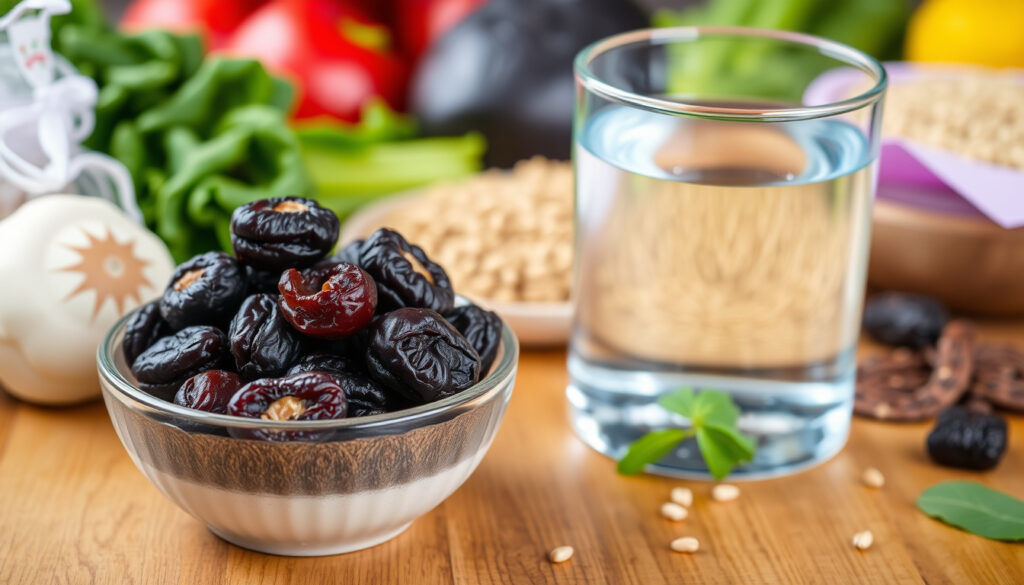
- Prunes (dried plums) and prune juice are the most studied natural laxatives due to sorbitol and fiber. (Temple Health)
- Pears, apples, and grapes also contain sorbitol and fiber. (Houston Methodist)
- Chia seeds (1–2 tablespoons soaked in water) form a gel that softens stool. (PubMed)
What is the BRAT diet?
- The BRAT diet (bananas, rice, applesauce, toast) is often recommended for diarrhea, not constipation. (Hopkins Medicine)
- It is low in fiber and can actually worsen constipation if used long-term.
- For constipation, swap the BRAT diet for a fiber-rich alternative: prunes, whole grains, and leafy greens.
Fruits with sorbitol for constipation
- Prunes, apples, pears, grapes, and raisins naturally contain sorbitol. (Temple Health)
- Berries (raspberries, blackberries) are high in fiber and recommended by the Bladder & Bowel Community. (Bladder & Bowel Community)
- Kiwi and figs also show evidence of improving stool frequency. (PubMed)
The pattern: Sorbitol-rich fruits and soluble fiber from chia seeds work synergistically with hydration to soften stool.
What is the 7 second poop relief method?
Does the 7 second poop method actually work?
- The 7-second method involves squatting, deep breathing, and a specific posture—but no controlled clinical trials have tested it. (Temple Health)
- The principle of squatting (knees above hips) is supported by colorectal research; it reduces the angle at the rectoanal junction. (Temple Health)
- Without robust evidence, it’s best to view it as a biomechanical aid rather than a guaranteed cure. Anyone with persistent constipation should see a doctor.
The viral 7-second method is based on sound squatting mechanics, but it’s not a substitute for medical treatment if you’re already backed up for days. The hype oversells it.
The catch: The posture is helpful, but the method itself lacks proof; rely on proven toileting techniques instead.
How to loosen a bowel blockage at home?
How to remove stuck poop from colon naturally?
- Increase fluid intake—warm water, prune juice, or pear juice can help soften stool. (Temple Health)
- Gentle abdominal massage: starting at the right lower belly, move up to the ribs, across to the left, and down to the lower belly. (Temple Health)
- Mineral oil enemas or glycerin suppositories can be used manually to soften the stool at the exit. (ASCRS)
What are the signs of a blocked bowel?
- Severe abdominal pain and cramping, bloating, inability to pass gas or stool, and vomiting. (ASCRS)
- If you have these symptoms, do not take strong laxatives—seek emergency medical care.
When to seek medical help for bowel obstruction
- No bowel movement for 3+ days despite home remedies. (AAFP)
- Severe pain, vomiting, or inability to pass gas. (ASCRS)
- Blood in stool or unexplained weight loss.
The implication: Blockage requires immediate medical attention; home remedies are only safe when obstruction is ruled out.
For anyone with a potential bowel obstruction, do not attempt home treatments—seek emergency care.
Step-by-Step: What to Do When You’re Constipated
- Start with hydration: drink 1–2 glasses of warm water or prune juice. (Temple Health)
- Move: walk around or do gentle abdominal stretches to stimulate peristalsis. (Houston Methodist)
- Attempt toileting 15–45 minutes after a meal (the gastrocolic reflex is strongest then). (Temple Health)
- Use a footstool to elevate your knees above your hips. (Temple Health)
- If no success after 30 minutes, consider a glycerin suppository or a single dose of an osmotic laxative (e.g., polyethylene glycol). (ASCRS)
- If you haven’t had a bowel movement for 3 days or have severe pain, call your doctor.
What this means: A structured approach—hydrate, move, posture, then medication—maximizes success while minimizing risk.
What’s Confirmed vs. What’s Still Unclear
Confirmed facts
- Increasing dietary fiber and fluid intake effectively treats most cases of constipation. (AAFP)
- Prune juice is a well-supported natural laxative. (Temple Health)
Unclear or partially supported
- The squatting position (knees above hips) makes bowel movements easier, but individual results vary. (Temple Health)
- The exact efficacy of the ‘7 second poop method’ has not been studied in controlled trials. (Temple Health)
- Whether caffeine helps or worsens constipation depends on individual hydration status. (Temple Health)
The pattern: Strong evidence supports fiber and hydration; other methods need more research or are conditional.
What Experts Say
“Medical guidelines consistently place lifestyle measures first for chronic constipation, including dietary changes and improved fluid intake.”
— AAFP (American Academy of Family Physicians)
“The ACG and AGA guideline identified magnesium oxide and senna as evidence-based treatments for chronic idiopathic constipation.”
— American College of Gastroenterology (professional society)
“Raspberries and blackberries are high-fiber fruits that can help with constipation.”
“The ideal time to try toileting is often 15 to 45 minutes after a meal.”
— Temple Health (academic medical center)
For the average person dealing with occasional constipation, the evidence supports a simple first line: drink more water, eat more fiber, and use a footstool on the toilet. The catch is that many people rush to laxatives before trying these basics. The smarter approach is to start with lifestyle changes, and only turn to a glycerin suppository or osmotic laxative when those fail. For anyone who’s been constipated for more than 3 days or has severe pain, the choice is clear: see a doctor, or risk a bowel obstruction that requires emergency care.
unitypoint.org, pubmed.ncbi.nlm.nih.gov, hey.nhs.uk, allinahealth.org, karger.com
For those seeking fast relief, evidence-based constipation relief tips offers practical, evidence-based strategies that complement dietary changes.
Frequently asked questions
Is it safe to take laxatives every day?
Daily use of stimulant laxatives (like bisacodyl or senna) is not recommended without medical supervision; they can cause dependence and electrolyte imbalances. Osmotic laxatives (like polyethylene glycol) are safer for long-term use but should still be discussed with a doctor. (ASCRS)
Can exercise help with constipation?
Yes. Regular physical activity, especially walking, stimulates peristalsis and can improve bowel regularity. Even a 10–15 minute walk after meals can help. (Houston Methodist)
How long is it normal to be constipated before seeing a doctor?
If you haven’t had a bowel movement for 3 days despite home remedies, or if you have severe pain, bloating, or vomiting, you should see a doctor. (AAFP)
What is the difference between constipation and a bowel obstruction?
Constipation is difficulty passing stool; a bowel obstruction is a complete blockage that prevents anything from passing. Signs of obstruction include severe abdominal pain, inability to pass gas, and vomiting. Obstruction is a medical emergency. (ASCRS)
Does stress cause constipation?
Stress can affect the gut-brain axis, slowing digestion and leading to constipation. Managing stress through relaxation techniques, exercise, and adequate sleep may help. (Houston Methodist)
Are there specific constipation remedies for children?
For infants and small children, gentle abdominal massage, bicycling the legs, and increasing fluid intake are safe first steps. Always consult a pediatrician before using laxatives. (UnityPoint Health)
What role does probiotics play in constipation relief?
Some studies suggest that probiotics, particularly Bifidobacterium and Lactobacillus strains, can improve stool frequency and consistency. However, evidence is mixed, and they are not a first-line treatment. (PubMed)
More related posts
 Square Feet in an Acre: 43,560 + Dimensions Calculator
 New Balance Sneakers for Women: Podiatrist-Approved Picks
 How to Unclog a Sink: Fast DIY Methods That Work
 Guess Who’s Coming to Dinner: Controversy, Quotes, and Legacy
 Back Exercises with Dumbbells: Build Strength at Home
 Spectrum Internet Customer Service – Complete Contact Guide
 Reason for Leaving a Job: Best Answers & Top 10 Reasons
