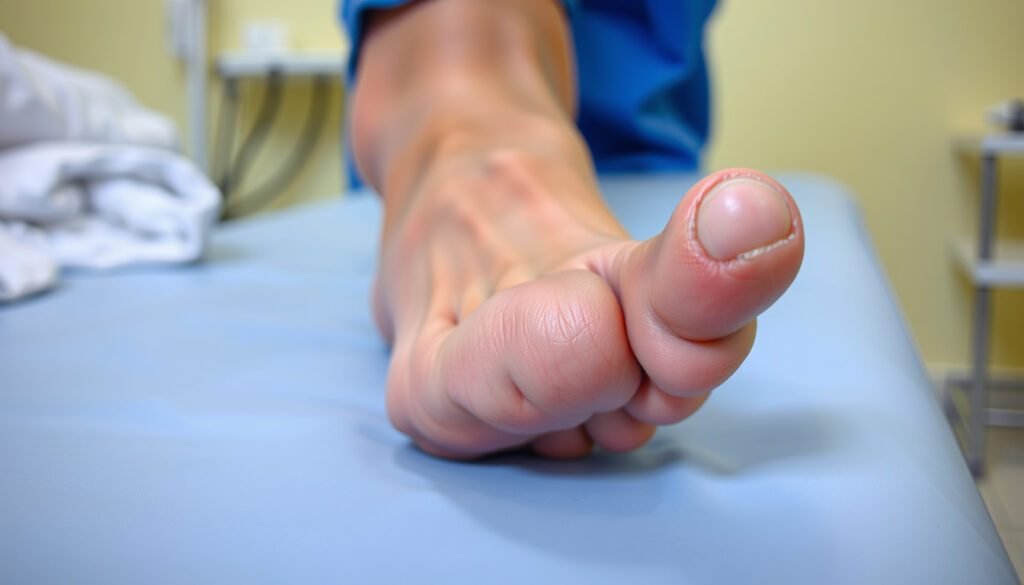
What Is a Bunion? Symptoms, Causes, and Treatment Options
If you’ve ever noticed a hard, tender bump forming on the side of your big toe, you’re far from alone. That bump, known as a bunion, affects an estimated 23% of adults between 18 and 65, and up to 36% of those over 65.
Prevalence: 23–36% of adults ·
Gender difference: Women up to 10× more likely ·
Primary cause factor: Ill‑fitting footwear ·
Surgery success rate: 85–90% satisfaction
Quick snapshot
- Bunions are a bony deformity of the big toe joint (Cleveland Clinic)
- Women are significantly more affected (Johns Hopkins Medicine)
- Surgery can remove the bunion but carries risks (Houston Methodist)
- Conservative treatments relieve symptoms but do not reverse the deformity (NHS)
- Exact long‑term effectiveness of newer minimally invasive techniques compared to traditional osteotomy (Royal Orthopaedic Hospital NHS)
- Whether bunion progression can be stopped entirely with preventive measures (NCBI Bookshelf)
- Optimal age for surgery to minimize recurrence (ACFAS)
- Bunions develop gradually over months to years (Johns Hopkins Medicine)
- Pain and deformity worsen progressively if untreated (Houston Methodist)
- Non‑surgical options should be tried first for mild cases (Cleveland Clinic)
- Surgery becomes an option when pain interferes with daily life (Royal Orthopaedic Hospital NHS)
Here are the essential takeaways about bunions at a glance.
| Category | Detail |
|---|---|
| Medical name | Hallux valgus |
| Prevalence | 23–36% of adults |
| Primary cause | Genetic foot structure + improper footwear |
| Surgery satisfaction | 85–90% |
| Non‑surgical cure | Not possible – only symptom relief |
| Gender bias | Women up to 10× more likely |
| Typical onset age | After 40, but can develop earlier |
| Symptom progression | Gradual over months to years |
| Conservative treatments | Wider shoes, pads, orthotics, ice, NSAIDs |
| Surgery types | Osteotomy, exostectomy, arthrodesis, minimally invasive |
What is a bunion?
Medical definition of hallux valgus
A bunion — medically termed hallux valgus — is a bony bump that forms at the base of the big toe, where the metatarsal bone meets the phalanx. The Cleveland Clinic describes it as a deformity in which the big toe joint shifts sideways, causing the toe to angle toward the second toe. Over time, the metatarsal head pushes outward, creating the visible bump.
This isn’t a sudden event. As Johns Hopkins Medicine notes, bunions develop gradually — often over months or years — as the joint alignment worsens. The bump itself consists of the protruding metatarsal head, inflamed soft tissue, and sometimes a fluid-filled sac (bursa) that can become swollen and tender.
What does a bunion look like?
Visually, a bunion appears as a firm, red or callused lump on the inner side of the foot near the big toe. The big toe itself angles inward toward the second toe, and in advanced cases, it may overlap or tuck under adjacent toes. The ACFAS points out that the bump can be accompanied by swelling, tenderness, and a feeling of stiffness in the joint. Corns or calluses often develop where the big toe rubs against the second toe.
What is a bunion made of?
The bump is not a growth of new tissue — it’s the natural bone and soft tissue displaced. The metatarsal head (the end of the long foot bone) protrudes outward, and the surrounding bursa and joint capsule become inflamed. In chronic cases, the bone itself may thicken. NCBI Bookshelf explains that the condition isn’t a cyst or tumor; it’s purely a structural misalignment that pushes bone and tissue out of their normal position.
The bump that looks like a growth is actually a normal bone trying to make room for itself in a cramped space. For women who have worn narrow heels for years, the foot literally remodels itself — but not in a good way.
Why this matters: Understanding that the bump is bone, not a soft lump, explains why non-surgical treatments can’t “shrink” it. No cream, pad, or exercise changes the position of bone once the joint has shifted.
What causes bunions?
What triggers a bunion?
Bunions don’t have a single cause; they result from a combination of inherited foot structure and environmental pressure. The NCBI Bookshelf identifies flat feet, splayfoot (wide forefoot), and loose ligaments as underlying structural factors. When you add tight, narrow, or high-heeled shoes — which force the toes together and load the forefoot — the joint gradually migrates out of alignment.
What is the biggest cause of bunions?
The strongest risk factor is genetics. If one or both parents had bunions, you’re more likely to develop them, according to NCBI Bookshelf. But the most modifiable cause is footwear: shoes that are too tight, pointed, or high-heeled put repetitive pressure on the forefoot. The Johns Hopkins Medicine notes this explains the gender gap — women are far more likely to wear confining shoes and consequently develop bunions.
You can inherit a foot shape that’s prone to bunions without ever wearing tight shoes. For those people, even sensible footwear may not prevent the condition — but ill-fitting shoes will accelerate it.
What is the average age to get a bunion?
Bunions can appear at any age, even in adolescence, but prevalence climbs significantly after age 40. The ACFAS reports that rates reach 23–36% in adults, with the highest numbers in older populations. ACFAS adds that spending long periods on your feet — common in occupations like nursing, retail, and teaching — can worsen symptoms regardless of age.
The pattern: For a woman with a family history of bunions who wears heels regularly, the condition is nearly inevitable by middle age. The structural predisposition sets the stage; footwear provides the trigger.
What happens if a bunion is left untreated?
Is it okay to leave a bunion untreated?
The Royal Orthopaedic Hospital NHS confirms that many people live with bunions for years without major issues. But ignoring a bunion doesn’t make it stable — the deformity tends to worsen over time. As the big toe pushes further inward, the metatarsal head sticks out more, increasing pain and making it harder to find comfortable shoes.
Possible complications of ignoring bunions
- Secondary deformities: The big toe’s inward shift can cause hammertoes (bent middle joints) in the second and third toes, as the ACFAS explains. Calluses and corns develop where toes rub together.
- Metatarsalgia: Pressure shifts to the ball of the foot, leading to deep, aching pain — a condition called metatarsalgia.
- Arthritis acceleration: The misaligned joint wears unevenly, speeding up cartilage loss. Johns Hopkins Medicine notes that arthritis of the big toe joint is a common long-term complication.
- Mobility and balance issues: Chronic pain alters gait, which can affect balance and increase the risk of falls, especially in older adults.
The longer you wait, the more complex the surgery becomes. The Milton Keynes University Hospital warns that severe, long-ignored bunions may require more invasive procedures with longer recovery times.
The trade-off: Living with a mild bunion may be perfectly fine. But ignoring progression until pain is constant means you lose the option of simpler, quicker surgical fixes that work best on moderate deformities.
How do you get bunions to go away?
What helps a bunion go away?
The NHS is blunt: “Surgery is the only way to get rid of them.” No cream, brace, or exercise can reverse the bone misalignment. But that doesn’t mean you’re stuck with pain. Several non-surgical strategies can reduce symptoms significantly.
Non-surgical treatment options
Follow these steps to manage bunion discomfort.
- Wider shoes: A toe box wide enough to let toes spread naturally reduces pressure. The Mayo Clinic recommends shoes with at least half an inch of space beyond the toes.
- Bunion pads and splints: Over-the-counter pads cushion the bump; night splints gently realign the toe. Evidence of long-term correction is limited, but they can ease discomfort.
- Orthotics: Custom insoles support the foot arch and distribute pressure away from the bunion. The Houston Methodist notes that orthotics don’t fix the bone but can make walking less painful.
- Ice and anti-inflammatories: Icing the joint for 15–20 minutes after activity and taking ibuprofen or paracetamol can reduce swelling and pain.
- Consult a podiatrist: A foot specialist can tailor a plan and monitor progression.
Can bunions shrink naturally?
No. Toe spacers, exercises, and “bunion correctors” may relieve symptoms by stretching tight muscles or reducing pressure, but the NCBI Bookshelf is clear: once the joint has shifted, it won’t return to its original position on its own. Treatment goals shift from cure to comfort once the bunion is established.
Why this matters: This is the key takeaway for anyone with early symptoms. You can’t undo a bunion with home remedies, but you can almost certainly prevent it from getting worse by choosing better shoes and managing inflammation early.
Do bunions need to be fixed?
When is bunion surgery recommended?
The Royal Orthopaedic Hospital NHS advises surgery when “simple measures such as well-fitting shoes, painkillers, and padding are no longer sufficient.” The Houston Methodist adds that surgery is considered when pain interferes with daily activities — walking, exercising, even standing — or when the deformity starts causing other foot problems like hammertoes.
Bunion surgery types and recovery
The table below outlines common surgical procedures and their recovery timelines.
| Procedure | What it involves | Typical recovery window |
|---|---|---|
| Osteotomy | Cutting and realigning the metatarsal bone | 6–8 weeks in a boot |
| Exostectomy | Removing the bony bump only (less common, higher recurrence) | 4–6 weeks |
| Arthrodesis | Fusing the big toe joint for severe arthritis | 3–6 months |
| Minimally invasive (keyhole) | Small incisions, less soft tissue damage | 2–4 weeks in a surgical shoe |
| Day-case surgery | Procedure done without overnight stay | Varies by technique |
Recovery varies widely. University Hospitals Sussex NHS notes that some minimally invasive procedures allow walking immediately in a surgical shoe, while traditional open surgery may require 6 weeks in a cast. The Private Clinic reports satisfaction rates of 85–90% across procedures.
Risks of delaying treatment
The risk isn’t medical emergency — it’s losing the window for simpler surgery. As the Milton Keynes University Hospital explains, early-stage bunions can often be corrected with a straightforward osteotomy. Advanced deformities may require more extensive bone cuts, metal screws, or joint fusion — all with longer recovery and higher complication risk.
What this means: If you’re in your 40s or 50s and have noticeable but not yet painful bunions, the smart move is to see a podiatrist now. You may not need surgery today, but knowing your stage helps you plan — and avoid a harder recovery later.
For the typical patient — a woman in her 50s with moderate bunion pain — the choice is between managing symptoms for another decade or opting for a procedure with an 85–90% satisfaction rate. The evidence leans toward surgery when pain limits daily life.
The implication: If pain is limiting your daily life, surgery offers a proven solution; if not, conservative care can keep you comfortable.
“A bunion is a bony bump that forms at the base of your big toe.”
Cleveland Clinic
“Surgery is the only way to get rid of them, but there are things you can do to ease any pain they cause.”
“It happens when some of the bones in the front part of the foot move out of place.”
Bunions are a slow, progressive structural disorder — not a sudden injury. The evidence is consistent: you can manage symptoms without surgery, but you cannot reverse the bone shift. For the millions of adults living with bunions, the decision comes down to a single question: Is the pain limiting your life? If the answer is yes, surgery offers a proven fix. If no, good footwear and conservative care will keep you moving. The choice, backed by data, is yours.
reliantfootandankle.com, theprivateclinic.co.uk, medschool.cuanschutz.edu, practiceplusgroup.com
For a deeper dive into the condition, you can read more about understanding bunions and their treatments from a comprehensive medical perspective.
Frequently asked questions
Can bunions come back after surgery?
Recurrence is possible, particularly if the underlying foot structure and footwear habits don’t change. The Royal Orthopaedic Hospital NHS notes that wearing appropriate shoes post-surgery and following rehabilitation guidelines significantly reduces the risk.
What is hallux valgus?
Hallux valgus is the medical term for a bunion. It describes the sideways deviation of the big toe (hallux) at the metatarsophalangeal joint. The Mayo Clinic explains that the angle of the deformity determines severity, from mild (less than 20 degrees) to severe (over 40 degrees).
Are bunions hereditary?
Yes. Family history is one of the strongest risk factors, according to NCBI Bookshelf. If one or both parents had bunions, your odds increase significantly because foot shape, ligament laxity, and joint alignment are inherited traits.
Do bunion correctors really work?
Bunion splints and toe spacers can temporarily relieve discomfort and may slow progression, but they cannot permanently straighten the joint. The NHS states that these devices provide symptom relief, not correction, because the bone has already shifted.
How long does bunion surgery recovery take?
Recovery duration depends on the procedure. Minimally invasive surgery may allow walking in a surgical shoe within days, while traditional osteotomy often requires 6–8 weeks in a boot or cast. Full recovery to unrestricted activity can take 3–6 months, as noted by University Hospitals Sussex NHS.
Can bunions be prevented?
Not entirely if you have a genetic predisposition, but you can slow or stop progression. The Houston Methodist recommends wearing shoes with a wide toe box, avoiding high heels for prolonged use, and addressing foot pain early.
What is the difference between a bunion and gout?
Gout is a form of inflammatory arthritis caused by uric acid crystals in the joint, while a bunion is a structural bone deformity. Gout attacks come on suddenly with intense pain and redness, whereas bunion pain develops gradually. A blood test for uric acid levels can distinguish them, per Mayo Clinic.
Should I see a podiatrist or an orthopedic surgeon for bunions?
Both are qualified. A podiatrist (foot specialist) typically handles diagnosis and conservative care. For surgery, an orthopedic surgeon or a podiatric surgeon with experience in foot reconstruction is appropriate. The ACFAS recommends choosing a surgeon who performs at least 30 bunion procedures per year.
Related reading: New Balance Sneakers for Women: Podiatrist-Approved Picks · Back of Knee Pain: Causes, Treatment, and When to Worry
More related posts
 2026 Winter Olympics Alpine Skiing: Venues, Schedule, and Athletes
 Ouran Highschool Host Club: Ratings, Haruhi & LGBT Facts
 Best Yuca Con Mojo Near Me – Find It in Cork & Ireland
 How Long Is the Great Wall of China? Exact Length & Facts
 Ram 2500 for Sale: Prices, Trims & Diesel Options
 Amoxicillin and Clavulanate Potassium: Uses, Dosage, Side Effects
 John B Outer Banks: Actor, Age, Plot & Relationships
 Cortes De Cabello Para Hombres Modernos – Face Shape Guide
