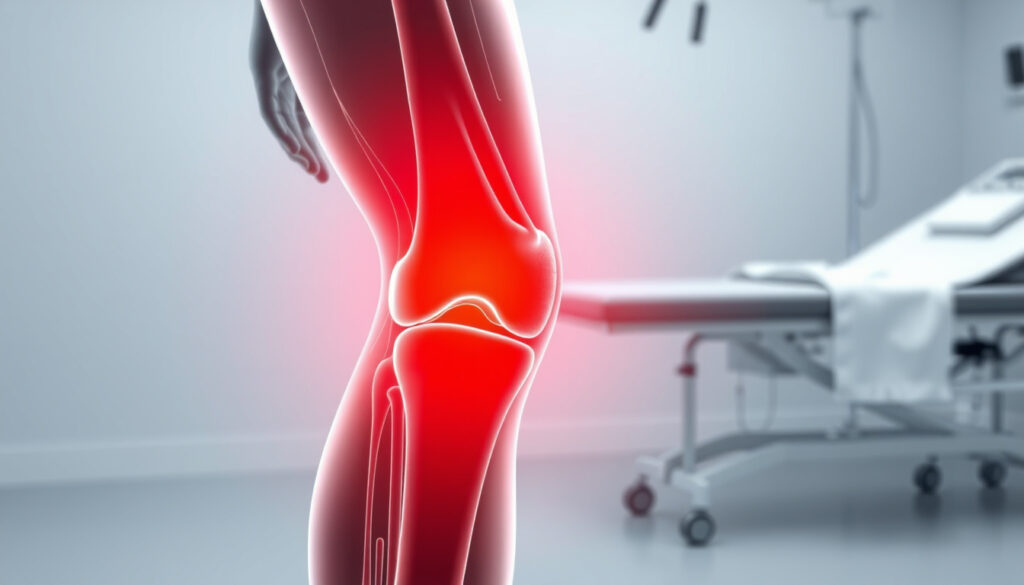
Back of Knee Pain: Causes, Treatment, and When to Worry
Anyone who’s felt a sharp tweak behind the knee while straightening their leg knows the worry that follows — is it a pulled hamstring or something more serious? That popliteal space, the soft hollow at the back of your knee, is a crossroads of tendons, ligaments, blood vessels, and fluid sacs, each capable of producing its own signature ache. This guide walks through the most common culprits behind back of knee pain, what you can do at home, and the red flags that demand a doctor’s attention.
Adults with knee osteoarthritis in the US: Over 30 million ·
Most common cause of popliteal swelling: Baker’s cyst ·
Key ligaments in the knee: 4 (ACL, PCL, MCL, LCL) ·
Normal knee range of motion: 0-135 degrees
Quick snapshot
- Baker’s cyst (Cleveland Clinic Orthopedic Care)
- Hamstring injury (Hospital for Special Surgery Sports Medicine)
- Meniscus tear (Healthline Medical References)
- Arthritis (Cleveland Clinic Orthopedic Care)
- Deep vein thrombosis (Cleveland Clinic Orthopedic Care)
- Rest and ice (Healthline Sports Medicine)
- Anti-inflammatory medication (Illinois Pain Pain Management)
- Physical therapy (Illinois Pain Pain Management)
- Knee brace (Cleveland Clinic Orthopedic Care)
- Surgery if needed (Healthline Orthopedic Surgery)
- Acute injury: sudden onset during sport (Hospital for Special Surgery Sports Medicine)
- Baker’s cyst: gradual tightness over days (Cleveland Clinic Orthopedic Care)
- DVT: sudden swelling and warmth (Cleveland Clinic Orthopedic Care)
- Try RICE protocol for 48 hours (Healthline Sports Medicine)
- If no improvement: see a provider for ultrasound (Illinois Pain Pain Management)
- Red flush or chest pain: emergency room (Healthline Sports Medicine)
Five key facts, one pattern: back of knee pain spans everything from a self-limiting cyst to a life-threatening clot, and the right diagnosis hinges on context — onset speed, swelling, and what makes it worse.
The table below gives a snapshot of common presentations, diagnostic approaches, and recovery timelines for posterior knee pain.
| Fact | Detail |
|---|---|
| Common cause of popliteal pain | Baker’s cyst (fluid-filled sac) (Cleveland Clinic) |
| Imaging test used | Ultrasound or MRI (Illinois Pain) |
| Home care protocol | RICE (rest, ice, compression, elevation) (Healthline) |
| Recovery time for mild hamstring strain | 1-3 weeks (Hospital for Special Surgery) |
| When to see a doctor | Persistent pain, swelling, or fever (Cleveland Clinic) |
What causes the back of the knee to be painful?
Baker’s cyst
- What it is: A fluid-filled sac that forms in the popliteal space when excess joint fluid bulges out. It’s almost always secondary to another knee problem like arthritis or a meniscus tear (Cleveland Clinic Orthopedic Care).
- Feels like: Tightness or a visible bulge behind the knee that may become painful when you fully straighten your leg.
- Who gets it: People with knee osteoarthritis — over 30 million US adults have OA, and a significant subset develop Baker’s cysts (Cleveland Clinic Orthopedic Care).
The catch: Many people mistake a Baker’s cyst for a pulled hamstring because the location is the same, but the treatment differs — stretching a Baker’s cyst can actually make it worse.
Hamstring tendinopathy
- What it is: Inflammation or micro-tears in the hamstring tendons where they attach to the back of the knee. It’s an overuse injury common in runners and cyclists (Hospital for Special Surgery Sports Medicine).
- Feels like: A dull ache or sharp pain when bending the knee against resistance or during the push-off phase of walking.
- Healing time: Mild strains recover in 1-3 weeks with rest and modified activity (Healthline Sports Medicine).
The pattern: If pain is at the very back of the thigh and knee, and you recently increased your running mileage, hamstring tendinopathy is the likely suspect.
Popliteal artery entrapment
- What it is: A rare condition where the popliteal artery gets compressed by surrounding muscles, usually the gastrocnemius. It’s more common in young, athletic men (Hospital for Special Surgery Vascular Surgery).
- Feels like: Cramping or claudication in the calf triggered by walking or exercise and relieved by rest.
- Why it matters: If untreated, it can lead to chronic artery damage, so anyone with exercise-induced calf cramping and no other clear cause should get a vascular evaluation.
What this means: Young athletes who develop reproducible calf cramping during exercise should not assume it’s just a “growing pain” or a muscle strain — popliteal entrapment is treatable but requires imaging.
Meniscus tear
- What it is: A tear in the C-shaped cartilage that cushions the knee joint. Posterior horn tears specifically cause pain at the back of the knee (Cleveland Clinic Orthopedic Care).
- Feels like: Pain when squatting or twisting, plus a catching or locking sensation. Some patients report a click with every step.
- Diagnosis: An MRI is the gold standard; ultrasound can also detect larger tears (Illinois Pain Pain Management).
The trade-off: Small meniscus tears can heal with rest and PT, but larger posterior horn tears often require arthroscopic surgery to prevent further joint damage.
Arthritis
- What it is: Osteoarthritis (most common) causes gradual cartilage breakdown with age. Rheumatoid arthritis is an autoimmune inflammation. Both can produce back of knee pain (Healthline Arthritis Reference).
- Feels like: Stiffness in the morning that loosens up, then pain after activity. When arthritis triggers a Baker’s cyst, the back-of-knee ache becomes sharper.
- Prevalence: Over 30 million US adults have knee osteoarthritis, making it one of the most common drivers of posterior knee pain (Cleveland Clinic Orthopedic Care).
The implication: Arthritis pain is often a chronic baseline, but a sudden worsening behind the knee could signal a new Baker’s cyst — not just disease progression.
Deep vein thrombosis (DVT)
- What it is: A blood clot in the deep veins of the leg, which can occur in the popliteal vein. It’s a medical emergency (Cleveland Clinic Vascular Medicine).
- Feels like: Swelling, warmth, redness, and tenderness in the calf and behind the knee. The Homan’s sign (pain when flexing the foot upward) is a classic — but not reliable — bedside test.
- Risk factors: Recent surgery, long flights or car rides, pregnancy, cancer, or genetic clotting disorders.
Why this matters: DVT kills if it travels to the lungs (pulmonary embolism). Anyone with unexplained calf swelling, heat, or chest pain needs an emergency room — not a telehealth consult.
The takeaway: The patient with back of knee pain must distinguish between six possible causes based on onset speed, swelling, and aggravating factors. A mechanical issue like a Baker’s cyst or hamstring strain typically responds to rest, while a vascular issue like DVT demands immediate imaging.
How do you treat back of knee pain?
Rest and activity modification
- First step: Stop the activity that hurts. For acute injuries, 48-72 hours of relative rest is standard (Healthline Sports Medicine).
- Listen to pain: If walking worsens the ache, switch to non-weight-bearing activity. Pain is a signal, not a challenge.
- Duration: Mild hamstring strains heal in 1-3 weeks. Most Baker’s cysts improve as the underlying joint issue is managed (Hospital for Special Surgery Sports Medicine).
The catch: Too much rest can stiffen the knee. The goal is relative rest — avoid the painful motion but keep the joint moving through pain-free range of motion.
Ice and compression
- Protocol: Apply ice for 20 minutes every 2-3 hours during the first 48 hours. Compression with a wrap helps contain swelling (Healthline Sports Medicine).
- For Baker’s cyst: Ice reduces the inflammation that drives fluid production. Compression sleeves can help with the “full” sensation.
- For DVT suspicion: Do NOT massage or compress a hot, swollen leg — you could dislodge the clot.
The trade-off: Ice is excellent for acute inflammation but does not fix the root cause. If back-of-knee swelling recurs every week, the underlying joint problem needs attention.
Over-the-counter anti-inflammatory medications
- Common agents: Ibuprofen (Advil, Motrin) or naproxen (Aleve) — taken with food to protect the stomach (Illinois Pain Pain Management).
- Limit: Use for 7-10 days at most for acute flare-ups. Long-term use risks kidney damage and GI bleeding.
- Efficacy: For arthritis-related pain, topical NSAID gels (diclofenac) work as well as pills with fewer side effects.
The pattern: NSAIDs treat the inflammation behind the pain, but they mask the underlying problem — if you need them daily for more than a week, see a doctor.
Physical therapy exercises
- Goal: Strengthen the quadriceps, hamstrings, and calf muscles to stabilize the knee joint (Illinois Pain Pain Management).
- Sample exercises: Hamstring curls (seated or lying), straight-leg raises, calf raises, and heel slides for range of motion.
- Evidence: PT for posterior knee pain focuses on eccentric hamstring exercises for tendinopathy and VMO strengthening for patellofemoral issues.
What this means for you: PT is not a generic routine. A therapist will tailor it based on whether your pain originates from a cyst, a tendon, or a ligament — and that changes everything.
Knee bracing
- Types: A popliteal pad or a simple neoprene sleeve can offload pressure from the back of the knee (Cleveland Clinic Orthopedic Care).
- When it helps: For mild instability or during high-impact activity. No brace treats the cause — it manages symptoms.
- Limits: Braces do not fix arthritis, cysts, or torn ligaments. They are an adjunct, not a cure.
The implication: A brace might buy you comfort during the day, but it cannot substitute for strength, flexibility, or a proper diagnosis.
Surgical options
- Meniscus repair: Arthroscopic trim or repair for posterior horn tears that cause locking or failed PT (Healthline Orthopedic Surgery).
- Baker’s cyst excision: Rare — surgery on the cyst alone usually fails. Address the underlying arthritis or meniscus tear, and the cyst shrinks on its own.
- PCL reconstruction: For high-grade PCL tears with instability, especially in athletes (Healthline Orthopedic Surgery).
- Steroid injections: Reduce inflammation inside the joint or cyst, often providing weeks of relief (Illinois Pain Pain Management).
- PRP (platelet-rich plasma): A regenerative injection for chronic tendon tears, though evidence is mixed (Illinois Pain Pain Management).
The trade-off: Surgery for back-of-knee pain is reserved for structural damage that doesn’t respond to 3-6 months of conservative care. The best outcomes come with clear diagnosis — so imaging matters.
What this means: The patient with back of knee pain should start with rest, ice, and NSAIDs for 48 hours, then escalate to physical therapy if symptoms persist. Surgery is reserved for structural damage that fails 3-6 months of conservative care.
Is walking good for knee pain?
Benefits of walking with proper form
- Lubrication: Walking gently moves joint fluid around, which can reduce stiffness and nourish cartilage (Cleveland Clinic Orthopedic Care).
- Strength: Regular walking strengthens the quadriceps and hamstrings, the muscles that absorb shock and stabilize the knee.
- Form tip: Walk with a mid-foot strike, avoid locking the knee at full extension, and keep the stride short to reduce posterior chain tension.
The pattern: For most people with mild arthritis or a resolving Baker’s cyst, walking is therapeutic — but form and distance matter.
When to avoid walking
- Acute DVT suspicion: Walking with an untreated clot can dislodge it. Do not walk if the calf is hot, swollen, or red.
- Acute locking or instability: If the knee buckles or catches with every step, walking risks further damage.
- Sudden onset of sharp pain: If walking makes a sharp pain behind the knee worse, it’s a sign to stop and rest.
The catch: The question “is walking good for back of knee pain?” has no universal answer — it depends entirely on what’s causing the pain.
Low-impact alternatives: swimming, cycling
- Swimming: Zero weight on the knee, ideal for maintaining cardiovascular fitness while the knee heals.
- Stationary cycling: A great way to maintain range of motion without impact. Keep the seat high enough to avoid excessive knee flexion (Hospital for Special Surgery Sports Medicine).
- Elliptical trainer: Elicits less popliteal strain than walking for some patients because it eliminates the heel-strike.
Why this matters: For the over-30-million Americans with knee OA, staying active is crucial — but choosing the right activity can make the difference between progress and a setback.
Walking is not inherently good or bad for back of knee pain. For the patient with a mild Baker’s cyst or arthritis, it’s beneficial. For the patient with an acute DVT or locked meniscus tear, it’s dangerous. The wrong answer here can cost weeks of recovery.
Should I be worried about pain behind my knee?
Signs of deep vein thrombosis (DVT)
- Classic triad: Swelling (often unilateral), warmth, and redness in the calf and popliteal area (Cleveland Clinic Vascular Medicine).
- Context: DVT is more likely after long travel (flights, car rides), recent surgery, pregnancy, or if you have a clotting disorder.
- Pain quality: Described as a deep, cramping ache that doesn’t improve with stretching.
What this means: If you have swelling and heat behind one knee with no history of injury, call your doctor or go to the ER. Do not massage the area.
When to seek emergency care
- Red flags: Chest pain, shortness of breath, or coughing up blood — these suggest the clot may have traveled to the lungs (pulmonary embolism).
- Severe pain with fever: Could indicate septic arthritis or a Baker’s cyst that has ruptured.
- Sudden loss of pulse or feeling in the foot: Rare but indicates arterial compromise — requires immediate vascular surgery.
The implication: For DVT, the mortality rate from untreated PE is high. Any new leg swelling with chest symptoms is a 911 call, not a “wait and see.”
Red flags: swelling, warmth, redness, chest pain
- Swelling and warmth: Always warrants an ultrasound to rule out DVT vs. Baker’s cyst vs. cellulitis.
- Inability to bear weight: Suggests a structural injury (meniscus tear, ligament rupture, fracture) that requires imaging.
- Knee locking: A mechanical block from a torn meniscus or loose body — not an emergency but needs orthopedic evaluation.
The trade-off: Many people with back of knee pain worry unnecessarily, but missing a DVT is catastrophic. When in doubt, an ultrasound is cheap peace of mind.
A patient with popliteal pain, unilateral calf swelling, and recent long-haul travel has a ticking clock. The difference between a harmless Baker’s cyst and a life-threatening DVT is an ultrasound — and a moment of clinical suspicion.
What vitamin am I lacking if my knee hurts?
Vitamin D deficiency and bone pain
- Connection: Low vitamin D is linked to bone pain and increased inflammatory markers in osteoarthritis. Some studies show that correcting a deficiency reduces joint pain.
- Who’s at risk: People with limited sun exposure, darker skin, older adults, and those living at northern latitudes.
- Testing: A simple blood test (25-hydroxyvitamin D) can confirm deficiency. Levels below 20 ng/mL are generally considered low.
The catch: Vitamin D supplementation helps if you’re deficient, but it’s not a cure-all for knee pain. It addresses one of many potential contributors.
Omega-3 fatty acids and inflammation
- Mechanism: Omega-3s (EPA and DHA, found in fish oil) are precursors to anti-inflammatory molecules that can reduce joint pain.
- Evidence: A 2017 meta-analysis found that omega-3 supplementation reduced joint pain and morning stiffness in rheumatoid arthritis patients.
- Source: Fatty fish (salmon, mackerel, sardines) or supplements of 2-3 grams daily.
The pattern: Omega-3s are a low-risk, moderate-benefit addition — especially for inflammatory arthritis — but they work slowly over weeks.
Calcium and magnesium for muscle function
- Calcium: Essential for muscle contraction and bone density. Deficiency can cause muscle cramps around the knee joint.
- Magnesium: Involved in muscle relaxation. Low magnesium is linked to nocturnal leg cramps and muscle tension.
- Balance: Calcium and magnesium need to be in balance — too much calcium without magnesium can worsen cramping.
Why this matters: If your back of knee pain comes with frequent calf cramps, especially at night, check your magnesium intake before reaching for a painkiller.
Supplements for knee pain are not magic. Vitamin D for a deficient patient: high-impact. Vitamin D for a replete patient: zero benefit. The cost of a blood test upfront saves months of wasted pill purchases.
“The key to differentiating a Baker’s cyst from a hamstring injury is simple: if the patient feels a bulge or tightness behind the knee with full extension, it’s probably a cyst. If pain is localized to the tendon during resisted knee flexion, it’s hamstring.”
— Dr. Mark Miller, orthopedic surgeon at Hospital for Special Surgery (HSS)
“Any patient with unilateral calf swelling, warmth, and redness needs an urgent vascular evaluation. The risk of a pulmonary embolism outweighs the inconvenience of a negative ultrasound.”
— Cleveland Clinic patient education material on DVT
For the millions of Americans who experience back of knee pain each year, the difference between a full recovery and a preventable tragedy often comes down to one question answered correctly: is this a mechanical issue or a vascular one? The answer lies in simple clinical clues — swelling, onset speed, warmth — and a low threshold for imaging. For the patient with a pulled hamstring or a Baker’s cyst, the path is conservative care and time. For the patient with DVT, the choice is clear: emergency room, no waiting.
A common cause of this discomfort is fluid on the knee, which can lead to swelling and limited mobility.
Frequently asked questions
Can a Baker’s cyst go away on its own?
Yes. If the underlying knee problem (such as arthritis or a meniscus tear) is treated, the cyst often shrinks on its own. For small, asymptomatic cysts, no treatment is needed — the body reabsorbs the fluid over weeks to months. Larger or painful cysts may require aspiration or a steroid injection.
Is heat or ice better for back of knee pain?
Ice is better for acute pain, swelling, and inflammation — apply for 20 minutes every 2-3 hours. Heat is useful for chronic stiffness or muscle tension before activity but should not be used on a swollen, red, or newly injured knee. For a Baker’s cyst, ice is preferred.
What stretches are safe for the back of my knee?
Gentle hamstring stretches (supine with a strap), calf stretches, and heel slides are generally safe for mechanical pain. Avoid deep knee bends or forceful hamstring stretches if a Baker’s cyst is present — stretching over the tense cyst can worsen it. Start with 10-second holds and stop if pain increases.
How do I know if my knee pain is serious?
Seek immediate care if you have unilateral swelling with warmth and redness (possible DVT), fever, inability to bear weight, knee locking, or chest pain with leg swelling. For gradual pain without these signs, a primary care visit within a week is appropriate.
Does knee pain always indicate arthritis?
No. Back of knee pain can stem from hamstring tendinopathy, Baker’s cyst, meniscus tear, PCL injury, popliteal artery entrapment, or deep vein thrombosis. Arthritis is one of many causes. A proper diagnosis requires a physical exam and often imaging.
What is the difference between a hamstring pull and a Baker’s cyst?
A hamstring pull hurts when you bend the knee against resistance (like pulling the heel toward the butt). A Baker’s cyst causes tightness or a bulge behind the knee that worsens during full knee extension. Ultrasound can differentiate them definitively.
How long does it take to recover from posterior knee pain?
Mild hamstring strains heal in 1-3 weeks. Baker’s cysts improve over weeks as the underlying joint issue is managed. Meniscus tears that require surgery take 4-6 weeks for basic recovery. DVT requires blood thinners for 3-6 months. The range is wide — recovery depends entirely on the underlying cause.
Can back of knee pain be caused by a blood clot?
Yes. Deep vein thrombosis (DVT) in the popliteal vein specifically causes pain, swelling, warmth, and redness behind the knee and calf. It is a medical emergency because the clot can break free and cause a pulmonary embolism. Any sudden unilateral leg swelling with pain warrants immediate evaluation.
More related posts
 Cast of Avatar 3: Full List for Fire and Ash
 U.S. Embassy Tbilisi Alert: Travel Safety & Services
 How to Read Music for Beginners: Step-by-Step Guide
 Alison Brie Movies and TV Shows: Full Career Guide
 New Homes for Sale – Texas Prices and Buying Guide
 What Is a Bunion? Symptoms, Causes, and Treatment Options
 Where Is Liberty University Located? Lynchburg, Virginia
 What Does Cottage Cheese Taste Like? Flavor Guide & Uses
