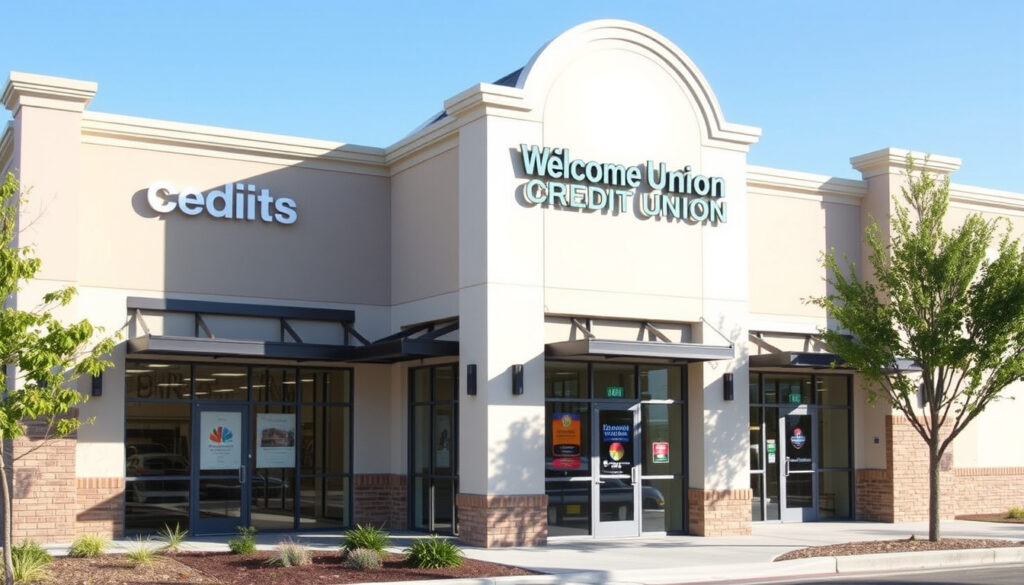
Community First Credit Union: WI, CA & FL Branches
If you’ve ever searched for “Community First Credit Union” and found yourself staring at branch locations in three different states, you’re not alone. The name is shared by at least two separate credit unions — one serving Wisconsin and another covering California — each with its own routing number, phone line, and membership rules. This guide cuts through the confusion, comparing what matters most: routing numbers, branch footprints, customer service channels, and how to join.
Founded (WI branch): 1959 ·
Branch locations: Jacksonville FL, Santa Rosa CA, Appleton WI, Clearlake CA ·
Serving area (WI): 7-county footprint ·
Mobile app: Available (per communityfirstcu.org)
Quick snapshot
- WI branch routing number: 275982801 (Community First Credit Union (WI) homepage)
- CA branch routing number: 321177599 (Community First Credit Union (CA) homepage)
- Exact number of members for each credit union
- Interest rates and fees for each branch
- Whether all branches share the same online platform
- WI branch founded in 1959; no major mergers or name changes publicly reported
- Expect continued digital expansion: both credit unions offer mobile apps and online account opening
| Attribute | Value |
|---|---|
| Founded (WI branch) | 1959 |
| Branches confirmed | Jacksonville FL, Santa Rosa CA, Appleton WI, Clearlake CA |
| Serving area (WI) | 7-county footprint |
| Customer service | Phone and online contact |
| Routing number | Varies by branch |
Where are Community First Credit Union branches located?
Three separate Community First Credit Unions operate under the same name across the country. The Wisconsin branch, founded in 1959, anchors a 13-location network in the Fox Valley region. The California branch, headquartered in Santa Rosa, runs 11 branches from Sonoma County to Clearlake. A Florida branch in Jacksonville also uses the name, though its online presence is less documented.
Jacksonville FL branch details
- Main Florida branch serving the Jacksonville area
- Offers checking, savings, loans, and business services
- Mobile app available (per communityfirstcu.org — note: same domain as WI branch; verify local site)
Santa Rosa CA branch details
- Headquarters at 1110 N. Dutton Avenue, Santa Rosa, CA
- 11 local branches across Sonoma, Napa, Lake, and Mendocino counties (Community First Credit Union (CA) locations page)
- Branch hours vary: some open Mon–Fri 9AM–5PM, others have midday closures
Appleton WI branch details
- Main branch at 509 N. Richmond Street, Appleton, WI (Community First Credit Union (WI) locations page)
- 13 branches total including De Pere, Green Bay, Manitowoc, Menasha, Neenah, Oshkosh, Waupaca, and more
- Lobby hours: Mon–Wed 8:30am–5pm, Thu–Fri 8:30am–6pm, Sat 8am–Noon
Clearlake CA branch details
- Additional California location within the same credit union as Santa Rosa
- Same services as Santa Rosa branch
- Community-focused banking with local customer service
The Wisconsin and California credit unions are entirely separate entities. If you move between states, you’ll need to open a new account — your routing number and membership won’t transfer.
What is the routing number for Community First Credit Union?
Routing numbers are tied to the specific credit union, not the shared name. Use the correct one to avoid delays in direct deposits, bill payments, or wire transfers.
Routing number for Wisconsin branch
The Wisconsin branch (communityfirstcu.org) uses routing number 275982801 (Community First Credit Union (WI) homepage). This number supports ACH and wire transfers.
Routing number for California branch
The California branch (comfirstcu.org) uses routing number 321177599 (Community First Credit Union (CA) homepage). A third-party finance reference confirms it supports ACH and wire transfers (Wise routing number database).
Checking your routing number
If you’re already a member, your routing number is printed on your checks. You can also log into your online banking account to verify the correct number for your branch.
Using the wrong routing number — even by one digit — can cause your payment to bounce or be delayed by days. Double-check before setting up a new direct deposit.
How do I contact Community First Credit Union customer service?
Each credit union maintains its own support team. Here are the confirmed contact channels.
Phone numbers for each branch
- Wisconsin (Appleton): 920-830-7200 (Community First Credit Union (WI) contact page)
- California (Santa Rosa): 707-546-6000 (Community First Credit Union (CA) contact page)
- California lost/stolen card: 1-866-820-5874 (same page)
Online contact forms
Both credit unions offer contact forms on their websites. The Wisconsin branch also provides a secure message center through its online banking portal.
Branch visit information
You can find a complete list of branch addresses and hours on the official locations pages:
- WI locations: https://www.communityfirstcu.org/locations
- CA locations: https://www.comfirstcu.org/branches
What services does Community First Credit Union offer?
Services are similar across both credit unions, but with some regional differences.
Checking and savings accounts
- Free checking, high-yield savings, and money market accounts
- No monthly maintenance fees on basic accounts (per website disclosures)
Loan products (auto, mortgage, personal)
- Auto loans: competitive rates for new and used vehicles
- Mortgages: home purchase, refinance, and home equity lines
- Personal loans: debt consolidation, emergency, and vacation loans
Business services
The Florida branch (communityfirstcu.org) highlights business checking, merchant services, and commercial loans. The Wisconsin and California branches also offer business accounts, though the product range may vary.
Mobile and online banking
- Mobile apps for iOS and Android with check deposit, transfers, and bill pay
- Online banking platform for account management, statements, and alerts
How do I join Community First Credit Union?
Membership is open to anyone who lives, works, or worships in the credit union’s service area. The process is straightforward.
Membership eligibility requirements
- Wisconsin: residents of a 7-county area (Calumet, Outagamie, Waupaca, Winnebago, Brown, Manitowoc, and Sheboygan counties)
- California: residents of Sonoma, Napa, Lake, Mendocino, and Marin counties
- Other eligible groups: employees of select companies, family members of current members
Steps to open an account
- Visit the credit union’s website or a local branch
- Choose an account type (checking, savings, or both)
- Provide identification (driver’s license, Social Security number)
- Make a minimum deposit — typically $5 to $25 for a share savings account
- Sign the membership agreement and set up online banking
Required documents
- Government-issued photo ID
- Proof of address (utility bill, lease)
- Social Security number or ITIN
One pattern across both credit unions: the $5 deposit to open a share savings account is the standard membership requirement.
Comparison: Wisconsin vs California Community First Credit Union
2 credit unions, one name — but the differences matter for anyone banking across state lines.
| Feature | Wisconsin (communityfirstcu.org) | California (comfirstcu.org) |
|---|---|---|
| Founded | 1959 | Not publicly specified |
| Routing number | 275982801 | 321177599 |
| Member service phone | 920-830-7200 | 707-546-6000 |
| Number of branches | 13 | 11 |
| Lobby hours (typical) | Mon–Wed 8:30–5, Thu–Fri 8:30–6, Sat 8–12 | Vary by location; most Mon–Fri 9–5 |
| Call center hours | Mon–Wed 7am–6pm, Thu–Fri 7am–6pm, Sat 7am–1pm | Mon–Fri 8am–6pm, Sat 9am–4pm |
| 24/7 card support | Not listed | 866-820-5876 and 866-820-5992 |
The trade-off: Wisconsin offers more branch locations and longer Saturday hours, while California provides 24/7 card support and a slightly larger service area for loan applications.
Confirmed facts
- Community First Credit Union operates in Wisconsin, California, and Florida
- WI routing number 275982801 is displayed on the official homepage (Community First Credit Union (WI) homepage)
- CA routing number 321177599 is displayed on the official homepage (Community First Credit Union (CA) homepage)
- Customer service is available by phone and online
- The Wisconsin branch was founded in 1959
What’s unclear
- Exact number of members for each credit union
- Interest rates and fees for each branch — rates are not published side by side
- Whether all branches share the same online platform or if they run separate systems
The bottom line: If you’re a current member, your best bet is to check your own credit union’s website for the most accurate and up-to-date information. For anyone looking to join, the decision comes down to geography — pick the credit union that serves your county.
Related reading: **Mission Lane Credit Card: Fees, Limits & Worth**
c1stcreditunion.com, comfirstcu.org, comfirstcu.org, communityfirstfl.org, firstcommunity.com, communityfirstfl.org, communityfirstfl.org
A detailed comparison of Community First Credit Unions weaknesses provides insight into the institution’s drawbacks.
Frequently asked questions
Does Community First Credit Union offer online banking?
Yes, both the Wisconsin and California branches offer online banking and mobile apps with check deposit, transfers, and bill pay.
What are the membership requirements for Community First Credit Union?
You must live, work, or worship in the credit union’s service area. Acceptable IDs include a driver’s license and Social Security number.
Can I open an account online with Community First Credit Union?
Yes, both credit unions allow online account opening. You’ll need to provide identification and make a minimum deposit (typically $5).
What types of loans does Community First Credit Union offer?
Auto loans, mortgages, home equity lines, personal loans, and business loans are available at both branches.
Are there ATM fees at Community First Credit Union?
Both credit unions offer surcharge-free ATM networks. Check their websites for a list of in-network ATMs.
Is Community First Credit Union federally insured?
Yes, both credit unions are federally insured by the NCUA, protecting deposits up to $250,000 per member.
How do I update my address with Community First Credit Union?
You can update your address online through your account portal or by visiting a branch. Some credit unions also accept address changes by phone.
More related posts
 Hermit Crab Without Shell: Survival, Care & What to Do
 A Very Jonas Christmas Movie: Review, Where to Watch & Guide
 Welcome to the Dollhouse – Plot, Cast, Awards and Legacy
 How Long Is the Great Wall of China? Exact Length & Facts
 Alaska Airlines Customer Service: Phone, Email & Chat Contacts
 Cruel Intentions Season 2 Canceled – What Happened
 Can Dogs Eat Peas – Safety, Benefits, Risks and Feeding Guide
 Queen Size Mattress Dimensions: US, UK & Ireland Guide
