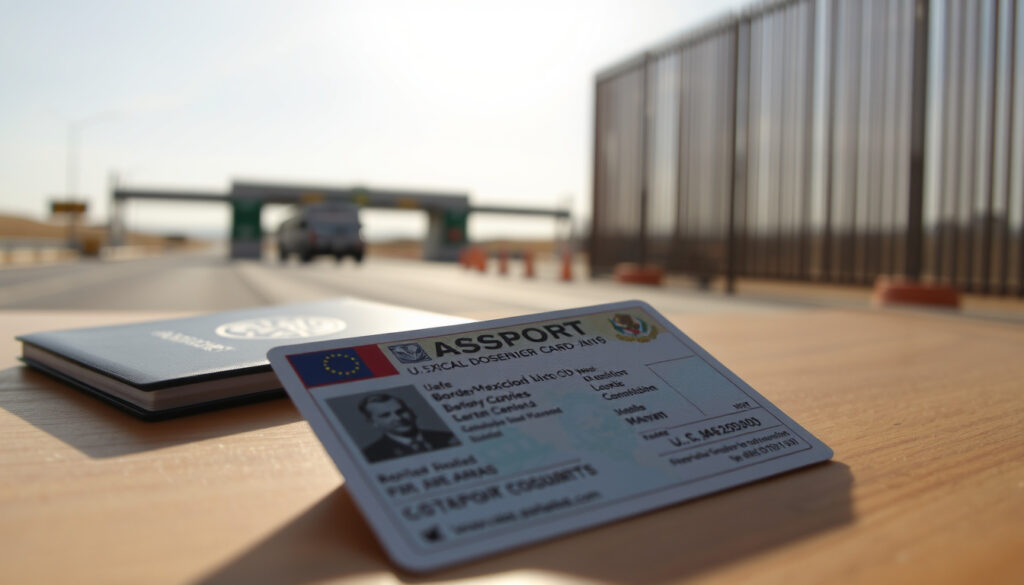
Tarjeta de Cruce Fronterizo (BCC): Guide for Mexicans
For Mexican citizens planning short trips to the U.S. border zone, the Border Crossing Card (BCC) simplifies entry by combining a B1/B2 visitor visa with a border crossing card on a single DSP-150 form, allowing stays of up to 30 days. However, obtaining one requires careful preparation and a mandatory in-person interview.
Issuing authority: U.S. Department of State / CBP ·
Holder eligibility: Mexican citizens ·
Maximum stay per visit: 30 days ·
Valid entry modes: Land or sea ·
Document form: DSP-150 (BCC + B1/B2 visa)
Quick snapshot
- Official DSP-150 document (U.S. Department of State (the agency issuing the BCC))
- B1/B2 visa + border crossing card (U.S. Department of State (the agency issuing the BCC))
- Valid for Mexican citizens only (U.S. Department of State (the agency issuing the BCC))
- Valid Mexican passport required (U.S. Customs and Border Protection (border enforcement authority))
- Complete online form DS-160 or DSP-150 (U.S. Customs and Border Protection (border enforcement authority))
- Schedule interview at U.S. consulate (U.S. Customs and Border Protection (border enforcement authority))
- BCC only for land/sea, up to 30 days (Nolo (legal information publisher))
- B1/B2 visa allows air entry, longer stays (Nolo (legal information publisher))
- BCC is combined document (Nolo (legal information publisher))
- Valid passport (U.S. Department of State (the agency issuing the BCC))
- BCC or visa (U.S. Department of State)
- Vehicle papers if driving (U.S. Customs and Border Protection (border enforcement authority))
Here are the core specifications for the Border Crossing Card.
| Official name in English | Border Crossing Card (BCC) |
| Issued by | U.S. Department of State via consulates (Travel.State.Gov) |
| Eligibility | Mexican citizens only |
| Maximum stay | 30 days per visit |
| Entry modes | Land or sea only |
| Equivalent form | DSP-150 (BCC + B1/B2 visa) |
What is the Border Crossing Card?
Definition and purpose
The Border Crossing Card (BCC) is a travel document issued exclusively to Mexican citizens who reside in Mexico. It allows holders to enter the United States for short visits to border areas (up to 25 miles from the border) by land or sea, for up to 30 days per visit, with B-1 (business) or B-2 (pleasure) status. The U.S. Department of State (the agency issuing the BCC) states that applicants must also demonstrate strong ties to Mexico that ensure their return after a temporary stay.
Official form DSP-150 and equivalence
The BCC is issued on Form DSP-150, a laminated credit-card-sized document that incorporates both a border crossing card and a B1/B2 visitor visa. According to Nolo (legal information publisher), the card is valid for an unlimited number of entries during its ten-year validity period, but only for short stays and within restricted travel zones. Unlike a standard B1/B2 visa, the BCC cannot be used for air travel into the United States.
One card, two functions — but restricted to the border zone. For Mexican citizens living close to the U.S. border, the BCC is a practical alternative to a full visa, as long as you never need to fly or travel deep into the country.
The pattern here is clear: the BCC provides convenience only for those whose travel habits align with its geographic and modal restrictions.
How to obtain the Border Crossing Card?
Eligibility requirements
To qualify for a BCC, you must be a Mexican citizen and resident of Mexico. You must meet the same eligibility standards as applicants for B1/B2 visas — including proving that you have a residence abroad that you intend to return to, and that your visit will be temporary. The U.S. Department of State (the agency issuing the BCC) requires that BCC applicants follow procedures set by consular sections in Mexico.
Documentation needed
Every applicant must have a valid Mexican passport at the time of application — this is confirmed by both the U.S. Department of State (the agency issuing the BCC) and U.S. Customs and Border Protection (border enforcement authority). Additional supporting documents include a recent photo, proof of ties to Mexico (employment, family, property), and any previous U.S. visas or travel history. CitizenPath (immigration service provider) lists these as standard requirements for the interview.
Application steps
The application process follows a clear sequence:
- Complete the online form: Fill out either Form DS-160 (nonimmigrant visa application) or DSP-150. The form collects personal information, travel history, and purpose of visit.
- Pay the application fee: The current fee for a BCC is $160 USD for adult applicants. Children under 15 who have at least one parent with a valid BCC or applying simultaneously pay a reduced fee (U.S. Department of State fee information).
- Schedule the interview: Appointments are booked online via the consular appointment system (travel.state.gov).
- Attend the interview: In-person appointment at a U.S. consulate or embassy in Mexico. Bring your passport, confirmation page, photos, and supporting documents.
- Biometrics and photo: Fingerprints and a digital photograph are taken at the consulate.
- Wait for processing: Adjudication typically takes 2–4 weeks, but can vary by consular post (Brudner Law (immigration law firm)).
- Receive the BCC: If approved, the card is mailed to you or available for pickup at the consulate.
Where to apply
BCC applications are accepted at U.S. consulates and embassies throughout Mexico. Major consulates include Ciudad Juarez, Tijuana, Hermosillo, Guadalajara, and Mexico City. Appointments are made online through the U.S. Department of State visa appointment system. Some ports of entry may process renewals, but first-time applications must go through a consulate.
Processing delays are common. Even with all documents, a BCC does not authorize employment in the United States — working without authorization can lead to revocation and a ban.
What this means: applicants need to plan around a potentially long wait time before their card is issued.
Difference between visa and Border Crossing Card?
Comparison of duration and use
The most significant difference is scope: a BCC is limited to border zones and land/sea entry, while a standard B1/B2 visa covers the entire United States and allows air travel. Three core differences boil down to entry mode, coverage area, and stay length.
| Feature | Border Crossing Card (BCC) | Standard B1/B2 Visa |
|---|---|---|
| Entry modes | Land or sea only (Nolo (legal information publisher)) | Air, land, or sea |
| Maximum stay per visit | 30 days (limited to border zone ~25 miles) | Up to 180 days (entire U.S.) |
| Validity | 10 years (standard fee); reduced for children | 10 years typically |
| Application form | DS-160 or DSP-150 (CitizenPath (immigration service provider)) | DS-160 |
| Cost (adult) | $160 (U.S. Department of State fee information) | $160 |
| Work authorized? | No (Brudner Law (immigration law firm)) | No (same) |
Costs and processes distinct
The BCC is essentially a B1/B2 visa with an integrated border crossing card — so the application process and fee are identical. The real difference is eligibility: only Mexican citizens can apply for a BCC, while B1/B2 visas are available to nationals of many countries. Wikipedia (online encyclopedia) notes that the BCC’s territorial restrictions (25 miles from the border) make it less flexible than a full visa.
If you plan frequent short trips to the border zone, the BCC is ideal. But if you ever need to fly to the interior or stay longer, a standard B1/B2 visa is the better choice — and it doesn’t require Mexican citizenship.
The implication: your travel patterns dictate which document provides the most value, despite their identical application processes and fees.
What documents are needed to cross the border?
Documents for crossing by car
If you drive into the United States from Mexico, you need more than just your BCC or visa. The U.S. Customs and Border Protection (border enforcement authority) requires a valid passport and either a BCC or visa for the driver and all passengers. Additionally, border officers may ask for vehicle registration, proof of insurance (Mexican or U.S. liability), and a temporary importation permit if the vehicle is not U.S.-registered. For visits that exceed 72 hours or go beyond the border zone, an I-94 arrival/departure record may be needed.
Documents for pedestrians
Walking across the border requires the same core documents: a valid Mexican passport and a BCC (or visa). No vehicle-related paperwork, but you may still need to complete a declaration form. The U.S. Department of State (the agency issuing the BCC) emphasizes that the BCC itself serves as both tourist and business visitor status under B1/B2, but border officers retain discretion to admit or deny entry.
The catch: regardless of mode, border officers have full discretion to deny entry even with valid documents.
Where can I get a Border Crossing Card?
U.S. consulates and embassies in Mexico
First-time BCC applications are processed at U.S. consular posts in Mexico. The largest volume is handled by the U.S. Embassy in Mexico City and the consulates in Ciudad Juárez, Tijuana, Guadalajara, Hermosillo, and Monterrey. Appointments are mandatory and must be booked via the U.S. visa appointment system.
CBP offices at ports of entry
Some U.S. ports of entry may handle renewals or limited services for existing BCC holders, but for initial issuance, only consulates are authorized. The CBP port of entry directory lists locations where you might inquire about renewal procedures.
The pattern: the consulate is the only door for new applicants, while renewal options offer some flexibility for existing cardholders.
Confirmed facts
- BCC allows 30-day visits to U.S. border areas via land or sea (U.S. Department of State)
- Application requires a valid Mexican passport and in-person interview (CBP Help Center)
- DSP-150 is the combined BCC/B1/B2 form (U.S. Department of State)
What’s unclear
- Exact fee amounts may change; always verify at travel.state.gov (U.S. Department of State)
- Processing times vary by consulate; no guaranteed turnaround (Brudner Law)
- What happens after a denial is not well documented — limited public information on reconsideration or appeals
- Standard validity is ten years for adults; reduced-fee children’s cards expire at age 15 (U.S. Department of State)
- BCC does not authorize employment in the U.S. (Brudner Law)
What applicants say: perspectives from official sources
“A Border Crossing Card (BCC) is a combination B1/B2 visitor visa and a border crossing card issued to Mexican citizens for short stays in the United States.”
U.S. Department of State (the agency issuing the BCC)
“You must have a valid Mexican passport at the time you apply for a BCC.”
U.S. Customs and Border Protection (border enforcement authority)
“The Border Crossing Card is valid until the expiration date on the front of the card, which is generally ten years after issuance.”
For Mexican citizens living near the U.S. border, the Border Crossing Card is a practical, cost-effective option — but only if your travel patterns match its restrictions. The choice is clear: for frequent short trips by land or sea, the BCC saves time and money; for air travel or extended stays, a standard B1/B2 visa is essential. Mexican citizens who prepare their documents and understand the BCC’s restrictions will find it a reliable tool for cross-border travel.
pozogoldsteinny.com, help.cbp.gov, ttp.dhs.gov, law.cornell.edu
Frequently asked questions
¿Necesito visa si tengo la tarjeta de cruce fronterizo?
No. The BCC already includes B1/B2 visa status. You do not need a separate visa for visits that comply with the card’s restrictions (land/sea entry, border zone, up to 30 days).
¿Cuánto cuesta la tarjeta de cruce fronterizo?
The current application fee for adults is $160 USD. Children under 15 who have at least one parent with a valid BCC (or applying simultaneously) pay a reduced fee. Check travel.state.gov for the latest amounts.
¿Puedo volar a Estados Unidos con la tarjeta de cruce fronterizo?
No. The BCC is valid only for land or sea entry. For air travel, you need a separate B1/B2 visa or a valid U.S. passport.
¿Cuánto tiempo dura la tarjeta de cruce fronterizo?
Standard BCCs are valid for ten years from issuance. Reduced-fee cards for children expire on the child’s 15th birthday (unless full fee is paid).
¿Puedo renovar la tarjeta de cruce fronterizo en línea?
Renewal procedures vary. Generally, you must appear in person at a U.S. consulate in Mexico. Some ports of entry may offer renewal for existing BCC holders; check with CBP or the nearest consulate.
¿Qué pasa si mi tarjeta de cruce fronterizo es rechazada?
If denied, you may reapply but should address the reasons for denial first (e.g., insufficient ties to Mexico). There is no formal appeals process; you can submit a new application with stronger evidence.
¿La tarjeta de cruce fronterizo es válida para todo Estados Unidos?
No. The BCC only permits entry to the U.S. border zone, generally within 25 miles of the border. Travel beyond that zone requires a valid I-94 or a full B1/B2 visa.
More related posts
 Denise Richards Movies and TV Shows: Complete Guide
 Dinner Ideas for Tonight: 25 Quick, Lazy, and Impressive Recipes
 Yen to USD Exchange Rate: Current Rates & Travel Tips
 Thank You in Spanish: Formal, Informal & Variations
 The Seven Deadly Sins: List, Order, Meanings & Virtues
 Sadie Sink Movies and TV Shows: Complete Career Guide
 Mission Lane Credit Card: Fees, Limits & Worth
 New York I Love You: Review of the 2008 Anthology Film
