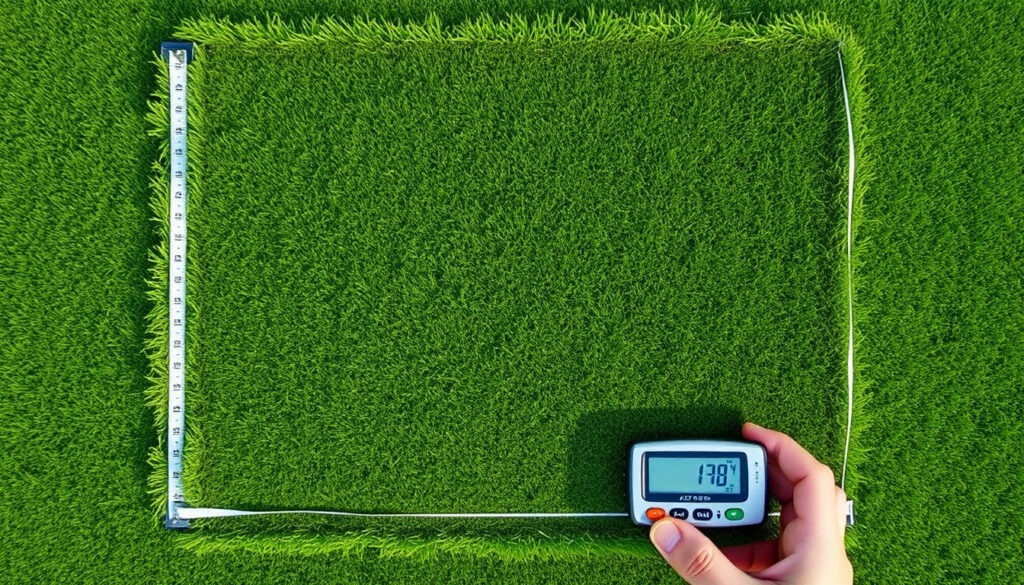
Square Feet in an Acre: 43,560 + Dimensions Calculator
Land measurements trip up a lot of people—not because the math is hard, but because 43,560 square feet doesn’t exactly paint a picture. This article cuts through the confusion with exact conversions, real-dimension breakdowns, and a few common myths that land shoppers and property pros get caught on.
1 Acre Equals: 43,560 Square Feet · Square Shape: 208.71 ft × 208.71 ft · In Square Meters: 4,046.86 · Quarter Acre: 10,890 sq ft · 1 Chain × 1 Furlong: 10 square chains
Quick snapshot
- 1 acre = 43,560 sq ft exactly (Housing.com)
- 1 chain = 66 ft; 1 furlong = 660 ft (Unit Converters)
- Whether a “commercial acre” is recognized in local zoning codes varies by municipality
- Precise US survey foot vs. international foot difference (~0.0002%) rarely matters for residential parcels
- Square acre: ~209 ft per side (The Calculator Site)
- Rectangular acre: 66 ft × 660 ft (the original chain-by-furlong definition) (The Calculator Site)
- Use the conversion formula to size up any rectangular lot from square footage to acres
- Watch for “approximate acre” listings that round up for marketing appeal
Across land-conversion resources, one number appears with near-perfect consistency: 43,560 square feet in a single acre. This figure traces back to the chain-and-furlong definition used in the imperial system, where an acre equals one chain wide by one furlong long.
The table below shows how an acre breaks down across imperial and metric units.
| Measurement | Value | Notes |
|---|---|---|
| Square Feet per Acre | 43,560 | Standard imperial/US definition |
| Square Meters per Acre | 4,046.86 | SI equivalent (rounded) |
| Square Yards per Acre | 4,840 | 1 sq yd = 9 sq ft |
| Hectares per Acre | 0.4047 | Metric land unit |
| Square Mile Fraction | 1/640 | 640 acres = 1 sq mi |
| Chain Definition | 66 feet | 1 chain × 10 = 1 furlong |
How many acres is 200 feet by 200 feet?
Multiplying 200 by 200 gives 40,000 square feet. Dividing by 43,560 yields approximately 0.917 acres—just under a full acre. This dimension shows up frequently in suburban lot listings where standard lot depths run around 200 feet.
Area calculation
- 200 ft × 200 ft = 40,000 sq ft
- 40,000 ÷ 43,560 = 0.9174 acres (rounded)
Comparison to standard acre
A 200-by-200-foot lot misses the full-acre mark by about 3,560 square feet—roughly the size of a small two-car garage. Listing agents sometimes round this up to “nearly one acre,” which is technically accurate but can mislead buyers expecting a full buildable acre.
The implication for buyers: a “nearly one acre” lot may fall short when permitting offices count it against minimum acreage requirements for construction or land use.
“Nearly one acre” and “one acre” are legally distinct. If your project needs a full acre for permitting, a 200-by-200 lot won’t qualify even if it sounds close.
Is 210 ft by 210 ft an acre?
A 210-by-210-foot square measures 44,100 square feet, which exceeds a full acre. This common approximation rounds to 1.01 acres—about 540 square feet over the mark.
Exact math
- 210 ft × 210 ft = 44,100 sq ft
- 44,100 ÷ 43,560 = 1.0124 acres
Common approximation
Some listing descriptions round 210-by-210-foot parcels to “one acre,” which overstates the area by roughly 1.2%. For most residential purposes this gap doesn’t matter, but for precise lot-coverage calculations (driveways, setbacks, impervious surface limits), that extra 540 square feet could push a project over its allowance.
What this means for developers: rounding errors in listed acreage can derail compliance calculations that regulatory bodies enforce to the square foot.
How many sq ft is a 1/4 acre?
One quarter of an acre equals 10,890 square feet. The math is straightforward: divide 43,560 by 4. This fraction of an acre is common in urban and semi-rural settings where smaller residential lots are the norm.
Quarter acre formula
- 43,560 ÷ 4 = 10,890 sq ft
- Square lot side: √10,890 ≈ 104.36 ft per side
- Perimeter: 104.36 × 4 ≈ 417.42 ft
Half acre extension
Extending the same logic, half an acre measures 21,780 square feet—double the quarter-acre. The two fractions together cover the range most commonly referenced in residential real estate listings.
The pattern here is useful for quick mental math: quarter and half acres follow a clean doubling sequence that simplifies lot comparisons.
What size is one acre of land?
An acre covers 43,560 square feet. The figure sounds abstract until you break it into real-world dimensions. A square acre (nearly square, actually) has sides of approximately 208.71 feet. The classic rectangular form is 66 feet by 660 feet—derived from the original chain-by-furlong definition.
Standard measurements
- Square shape: ~208.71 ft × 208.71 ft
- Rectangle: 66 ft × 660 ft
- Rectangle (alternate): 180 ft × 242 ft
Visual comparisons
Picture a American football field, including end zones: that’s about 57,600 square feet. An acre is roughly 75% of that—still large enough to hold a comfortable suburban home, large garden, and driveway with room to spare.
What this means in practice: a single acre provides enough space for a typical suburban house with yard, but irregular lot shapes can dramatically reduce usable buildable area.
Irregularly shaped lots often list as “X acres” based on a bounding rectangle, not the actual buildable area. A flag lot or pie-shaped parcel with the same acreage may have significantly less usable flat ground than a rectangular lot of equal size.
Is 400 ft by 400 ft 1 acre?
No. A 400-by-400-foot parcel covers 160,000 square feet, which equals approximately 3.67 acres. This is a common overestimate—many land shoppers assume a 400-foot square is the baseline for a full acre.
Large parcel calc
- 400 ft × 400 ft = 160,000 sq ft
- 160,000 ÷ 43,560 = 3.6717 acres
Real estate context
A 400-by-400-foot property is closer to 3.7 acres—more than three times the size of a standard suburban residential lot. This scale is more typical of small farms, hobby farms, or larger rural holdings than typical urban or suburban home sites.
The catch: land buyers working with tight budgets often assume 400×400 is a standard lot size when it’s actually nearly four acres—a significant miscalculation that affects both pricing expectations and zoning eligibility.
There are 43,560 square feet in an acre. (The Calculator Site, land conversion resource)
Acres to square feet formula: multiply acres by 43,560. (Omni Calculator, conversion tool provider)
Related reading: How Many Oz in a Pint · How to Measure Inseam
unitconverters.net, math.answers.com, calculatorsoup.com, vedantu.com, inchcalculator.com, gpacalculatorplus.com, bajajfinserv.in, magicbricks.com
An acre precisely measures 43,560 square feet, a standard detailed with exact dimensions and facts in resources aiding land purchases and agricultural planning.
Frequently asked questions
How many square meters in 1 acre?
One acre equals 4,046.86 square meters. For reverse conversions, divide square meters by 4,046.86 to get acres.
What are 1 acre dimensions in feet?
A square acre measures approximately 208.71 feet on each side. The classic rectangle is 66 feet by 660 feet. Alternate rectangular dimensions include 180 feet by 242 feet.
How many square feet in 1/2 acre?
Half an acre equals 21,780 square feet—exactly twice the quarter-acre figure of 10,890 square feet.
How many square yards in 1 acre?
One acre equals 4,840 square yards, since one square yard contains 9 square feet (43,560 ÷ 9 = 4,840).
How many acres is 100m by 100m?
A 100-meter by 100-meter parcel covers 10,000 square meters. Dividing by 4,046.86 yields approximately 2.47 acres—making it considerably larger than a standard residential lot.
What is a chain in land measurement?
A chain is 66 feet, historically defined as the length of a surveyor’s chain. Ten chains equal one furlong (660 feet), and one chain by one furlong defines the traditional acre.
How to calculate acres from feet?
Measure the rectangular lot in feet (length × width = square footage), then divide by 43,560. For irregularly shaped lots, split the area into rectangles, calculate each, and sum the results before dividing.
More related posts
 Ouran Highschool Host Club: Ratings, Haruhi & LGBT Facts
 Sydney Sweeney Glen Powell – Truth Behind Dating Rumors
 How Many FNAF Games Are There? Full List & Count 2025
 Best Black Friday Deals Ireland 2026: Who Has the Best
 How to Ace the SAT: Study Plan, Score Percentiles & Strategies
 Can Dogs Eat Blueberries? Safety, Benefits, and Feeding Guide
 Is Chase Bank 24 Hour Customer Service? Phone & Hours
 Retroactive Social Security Payments – Rules, Eligibility, Timeline
