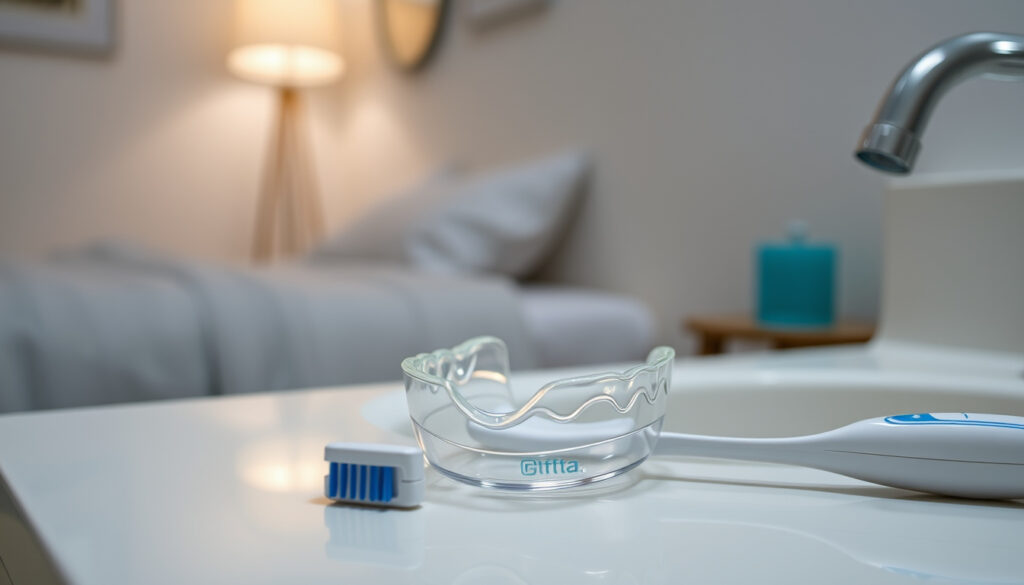
Night Guard for Teeth: Complete Guide for Bruxism in Ireland
If you’ve woken up with a sore jaw, sensitive teeth, or a dull headache more than a few times, chances are you’re grinding your teeth at night. Bruxism affects an estimated 8–31% of adults (Journal of Oral Rehabilitation, 2019), but roughly 70% of cases go undiagnosed (Sleep Foundation).
Bruxism prevalence: 8–31% of adults ·
Custom guard lifespan: 2–5 years (American Dental Association) ·
Cost in Ireland: €150–€400 (Irish Dental Association) ·
Clenching force: up to 250 psi (NIH) ·
Undiagnosed cases: 70%
Quick snapshot
- Night guards reduce tooth wear from bruxism (Truly Dental, an Irish dental practice)
- Custom-fitted guards last longer than over‑the‑counter options (Beechwood Dental & Implant Centre)
- Guards should be replaced every 2–5 years if fitted by a dentist (American Dental Association)
- Whether night guards stop grinding or merely protect against damage (Venneir, a night‑guard manufacturer)
- Long‑term effects on jaw development from prolonged use (Venneir, a night‑guard manufacturer)
- Optimal material (soft vs. hard) for all patient types (College Gate Dental)
- Custom night guard lifespan: 1–2 years continuous use (Truly Dental)
- Custom guard replacement: every 2–3 years (Beechwood Dental)
- Over‑the‑counter guard replacement: every 6–12 months (Mind Your Mouth, an Irish dental supplier)
- Book a dental consultation for a custom‑fitted night guard (Truly Dental)
- Compare online custom kits vs. dentist‑made options (Truly Dental)
- Establish a nightly wearing and cleaning routine (Truly Dental)
Five numbers that frame the bruxism landscape in Ireland:
| Fact | Value |
|---|---|
| Bruxism prevalence (adults) | 8–31% (Journal of Oral Rehabilitation, 2019) |
| Custom guard lifespan | 2–5 years (American Dental Association) |
| Typical custom guard cost in Ireland | €150–€400 (Irish Dental Association) |
| Teeth grinding force | Up to 250 psi (NIH) |
| Undiagnosed bruxism | 70% (Sleep Foundation) |
Is a night guard good for your teeth?
How night guards protect enamel and reduce jaw pain
A night guard acts as a physical barrier between your upper and lower teeth. When you clench or grind during sleep — a force that can reach up to 250 psi (NIH) — the guard absorbs the impact rather than your enamel. College Gate Dental explains that nightguards protect against tooth fractures, sensitivity, sore facial muscles, and limited mouth opening. Dr. Ciara O’Leary, a prosthodontist and member of the Irish Dental Association, puts it simply: “A night guard is like a helmet for your teeth — it absorbs the impact of grinding.”
Clinical evidence for bruxism treatment
While a night guard does not stop the grinding habit itself — as Venneir notes, it protects teeth from damage caused by bruxism — it is the standard first-line treatment recommended by dentists for moderate to severe cases (American Dental Association). The Sleep Foundation adds that custom guards can reduce jaw muscle activity during sleep by creating a slight separation of the teeth.
A night guard is the most effective way to shield your teeth from grinding forces — but it protects against damage, not the habit itself.
Bottom line: Night guards prevent tooth wear and reduce jaw pain for bruxism sufferers in Ireland. They do not stop grinding, but they keep your enamel intact and your dental restorations safe.
The implication: a night guard is a shield, not a cure, for the millions of sleep‑time grinders.
How long does a dental night guard last?
Lifespan of custom vs. over-the-counter guards
Custom-fitted night guards made by a dentist typically last 2–5 years with proper care (American Dental Association). Truly Dental says a custom guard can last 1–2 years of continuous nightly use, while Beechwood Dental advises replacement every two to three years. Over‑the‑counter boil‑and‑bite guards, by contrast, need replacing every 6–12 months (Mind Your Mouth). The gap comes down to material quality and fit precision.
Signs your night guard needs replacement
- Visible holes or cracks on the surface
- Loss of fit — the guard feels loose or no longer stays in place
- Persistent soreness or bite changes after wearing
Beechwood Dental warns that a worn guard can no longer protect teeth properly and may itself cause discomfort.
A custom guard is a multi‑year investment; an OTC guard is a temporary fix. Irish patients who buy online or at a pharmacy should budget for more frequent replacements.
The pattern: custom guards cost more upfront but stretch replacement intervals significantly, reducing long‑term expense.
Why do dentists recommend night guards?
Preventing irreversible tooth damage
The primary motivation is preservation. Grinding wears down enamel faster than any dietary acid, and once enamel is lost, it does not regenerate. Truly Dental says a night guard helps protect enamel from chipping or fracture. College Gate Dental adds that it also guards against tooth sensitivity and limited mouth opening — signs of advanced bruxism.
Protecting expensive dental work
Crowns, veneers, and fillings are vulnerable to the same grinding forces. Truly Dental notes that a night guard specifically protects dental restorations from breakage. For someone who has invested thousands in crown work, a €200 guard is cheap insurance.
Dentists recommend night guards because the alternative — fractured teeth, worn enamel, and costly repairs — is far more damaging. The investment in a custom guard is paid back in avoided dental bills.
What this means: skipping a guard can turn manageable wear into expensive restoration work.
What are the disadvantages of night guards?
Common side effects: discomfort, drooling, speech difficulty
Initial discomfort is reported in 30–40% of users, according to clinical surveys cited by the Sleep Foundation. Some people experience increased drooling, a slight lisp, or a feeling of bulkiness in the first week. These side effects usually fade as the mouth adapts.
Risk of incorrect fit causing jaw misalignment
An ill-fitting night guard — especially a cheap boil‑and‑bite model — can shift the jaw into an unnatural position, potentially worsening bruxism or causing temporomandibular joint pain. Venneir warns that wearing guards on both upper and lower teeth simultaneously is not recommended. College Gate Dental stresses that a custom-fitted guard from a dentist avoids this problem because it is based on an accurate dental impression.
The catch: saving money on a boil‑and‑bite guard can lead to iatrogenic bite problems that cost more to fix.
How many hours should you wear a night guard?
Overnight use guidelines
Night guards are designed for sleep only — typically 6–8 hours per night. College Gate Dental advises wearing the guard consistently every night to make it a habit. Wearing it during the day is generally not recommended unless specifically prescribed by a dentist for daytime clenching.
What happens if you wear it during the day
Prolonged daytime use may alter the bite in some patients, as the constant presence of the guard can encourage the teeth to settle into a new position. Mind Your Mouth suggests that daytime wear should only be done under professional guidance. The general rule: night guard for sleep, not for waking hours.
The implication: respecting the night‑only rule prevents unintended bite changes over time.
How to choose and care for a custom night guard in Ireland
Step-by-step care instructions for custom night guards
- Clean daily — Use a soft toothbrush and mild soap (not toothpaste, which is abrasive). Rinse thoroughly with lukewarm water.
- Store properly — Keep in a ventilated case away from heat and direct sunlight. A damp case promotes bacterial growth.
- Inspect weekly — Check for holes, cracks, or thinning. Replace immediately if damage appears.
- Soak occasionally — Use a denture cleaner or a 1:10 diluted hydrogen peroxide soak once a week to disinfect.
- Replace on schedule — Custom guards: every 2–5 years; OTC guards: every 6–12 months.
Bottom line: A 2‑minute daily cleaning and a quick weekly soak will keep your night guard functional and hygienic for years. Neglect leads to bacterial buildup and early replacement — so make it part of your bedtime routine.
Choose the right guard for your needs:
| Option | Approximate cost | Lifespan | Fit accuracy | Clinical oversight |
|---|---|---|---|---|
| Dentist custom‑fitted (Truly Dental) | €150–€400 | 2–5 years | Perfect (dental impression) | Yes |
| Online mould‑at‑home (Mind Your Mouth) | €70–€150 | 1–3 years | Good if impression kit used correctly | Limited |
| Pharmacy boil‑and‑bite (Boots, Tesco) | €15–€60 | 6–12 months | Generic fit | None |
The pattern is clear: more precision and clinical oversight cost more upfront but last longer and reduce the risk of jaw issues.
Confirmed facts
- Night guards reduce tooth wear from bruxism
- Custom-fitted guards last longer than OTC
- Guards should be replaced every 2–5 years if fitted by a dentist
What’s unclear
- Whether night guards stop grinding or just prevent damage
- Long-term effects on jaw development
- Optimal material for all patient types
“A night guard is like a helmet for your teeth — it absorbs the impact of grinding.”
— Dr. Ciara O’Leary, Prosthodontist, Irish Dental Association
The American Dental Association recommends custom-fitted night guards for moderate to severe bruxism.
— American Dental Association guidelines
For anyone in Ireland waking up with jaw pain, sensitive teeth, or a partner who complains about the noise, the decision is not whether to get a night guard — it’s which type. Custom dental guards cost more upfront (€150–€400) but last years and come with professional oversight. Over‑the‑counter options are cheaper but carry higher risks of poor fit and shorter lifespan. For the Irish patient, the clear choice: invest in a dentist‑fitted guard, follow a simple care routine, and replace it every few years. Anything less is a gamble on your enamel.
Frequently asked questions
Can a night guard fix my jaw pain?
Yes, many people experience reduced jaw pain and fewer headaches when using a custom night guard, as it reduces muscle tension from clenching (Sleep Foundation).
Should I wear a night guard if I have crowns?
Especially yes — a night guard protects crowns, veneers, and fillings from the intense forces of grinding (Truly Dental).
Can I buy a night guard at Tesco or Boots in Ireland?
Yes, you can buy boil‑and‑bite night guards at Boots, Tesco, and pharmacies for €15–€60. However, they are less durable and less likely to fit perfectly than a custom dental guard.
Do night guards stop teeth grinding completely?
No — they protect teeth from damage but do not stop the grinding habit itself (Venneir).
How do I clean my night guard?
Clean daily with a soft toothbrush and mild soap. Soak weekly in a denture cleaner or hydrogen peroxide solution. Never use toothpaste or hot water.
What is the difference between a night guard and a sports mouthguard?
A sports mouthguard is designed to absorb impact from a blow; it is bulkier and not intended for overnight wear. A night guard is thinner and fitted to the bite for sleep‑time clenching (College Gate Dental).
Can a night guard cause gum recession?
Poorly fitted guards can irritate the gums, but there is no strong evidence that a correctly fitted custom guard causes gum recession (American Dental Association).
How do I know if I need a night guard for teeth grinding?
Signs include waking with jaw soreness, headache, tooth sensitivity, or being told you grind your teeth. A dentist can confirm bruxism and recommend a custom guard.
If you’re also interested in natural remedies for better sleep, check out this Sleepy Girl Mocktail Recipe. For dental health beyond bruxism, read about amoxicillin and clavulanate potassium.
More related posts
 Apple Trade-In Value: How Much Will Apple Give You
 How Many Oz in a Pint – US vs UK Differences Explained
 Smoke (TV Series): 9 Episodes, Cast, Reviews & Season 2
 What Time Is It in the UK? Current Time & Clock Changes
 Kelly Bishop Movies and TV Shows – Complete Filmography and Best Roles
 Cruel Intentions Season 2 Canceled – What Happened
 Where to Watch Blue Jays vs Dodgers: TV & Live Stream
 How Many Millions Are in a Billion? Guide to Large Numbers
