Israel Attacks Iran Today: Latest Updates on the Conflict
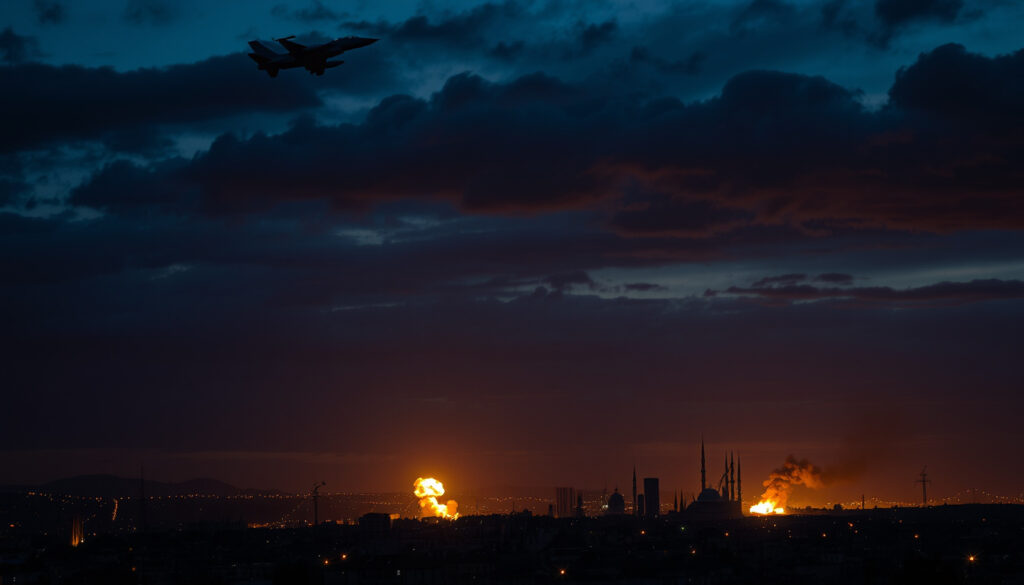
The Middle East woke up to a new reality on 28 February 2026, when Israel and the United States launched coordinated strikes against Iran. The attacks, confirmed by multiple news outlets and conflict monitors, triggered a cascade of Iranian retaliation, maritime clashes in the Strait of Hormuz, and a regional crisis that shows no signs of cooling.
Date of first coordinated strike: 28 February 2026 ·
Iranian strikes recorded (first week): 90+ ·
Iranian shipping attacks: 25+ ·
Ceasefire agreement date: 8 April 2026
Quick snapshot
- US and Israeli forces struck Iran on 28 February 2026 (Al Jazeera)
- Iran launched over 90 strikes against Israel within the first week (ACLED via ReliefWeb)
- Iran attacked at least 25 vessels in the Gulf and Strait of Hormuz (ACLED)
- Two-week ceasefire agreed on 8 April 2026 (Al Jazeera)
- Exact reasons for the Israeli-US attack have not been officially stated
- Whether the US launched independent strikes or acted solely in a joint capacity
- Full extent of casualties and damage to Iranian infrastructure
- Whether Iran will retaliate further after the ceasefire
- 28 February 2026: US-Israeli strikes begin (BBC)
- 1 March 2026: Over 30% of shipping attacks occur (ACLED)
- 10 March 2026: Attacks resume after IRGC threats (ACLED)
- 8 April 2026: US and Iran agree to two-week ceasefire (Al Jazeera)
- Ceasefire period ends 22 April 2026 – renewal uncertain (Al Jazeera)
- US naval blockade on Iranian ports remains in effect (Al Jazeera)
- Global oil markets continue to react to Strait of Hormuz disruptions (Al Jazeera)
- Diplomatic efforts via UN and regional mediators are ongoing (Al Jazeera)
The conflict has already produced a staggering amount of data. Here are the key figures from the first weeks of the crisis.
| Metric | Value |
|---|---|
| First coordinated strike date | 28 February 2026 |
| Iranian strikes against Israel (28 Feb – 4 Mar) | 90+ |
| Iranian strikes directly impacting civilian areas | ~20 |
| Fatalities from Iranian strikes on Israel | At least 10 |
| Iranian attacks on shipping in Gulf/Strait of Hormuz | 25+ |
| % of shipping attacks on 1 March 2026 | Over 30% |
| Ceasefire agreement date | 8 April 2026 |
| US naval blockade announced | 12 April 2026 |
| GCC states targeted by Iran | 6 (Bahrain, Kuwait, Oman, Qatar, Saudi Arabia, UAE) |
| Maritime incidents (1–2 March) | At least 6 |
Why did Israel attack Iran today?
The immediate trigger for the 28 February 2026 strikes remains officially unconfirmed. Israeli and US officials have not publicly detailed the rationale, but the attacks targeted military and nuclear sites, according to Al Jazeera and BBC. The ACLED (Armed Conflict Location & Event Data Project) described the operation as the start of a wider war that rapidly escalated across the Middle East.
Reported reasons from Israeli officials
- No official justification has been published by Israeli spokespeople as of the latest reports.
- Analysts point to long-standing Israeli concerns over Iran’s nuclear enrichment progress and proxy militias.
- Al Jazeera frames the attack as part of a “US-Israel war on Iran” (source).
Alleged Iranian nuclear and military targets
- BBC reported that the strikes hit military and nuclear sites (BBC).
- ACLED noted that the initial bombing was coordinated and widespread, affecting multiple locations in Iran.
Context of previous hostilities
- The 2026 attack followed years of shadow war, including cyberattacks, proxy conflicts, and the 2024–2025 escalation cycle.
- Iran had previously threatened to block the Strait of Hormuz in response to sanctions.
The implication: The lack of a stated rationale may be a deliberate tactic to maintain strategic ambiguity, but the coordinated nature of the attack signals long-term planning.
Did the US strike Iran today?
Yes – the 28 February 2026 operation was a coordinated US-Israeli effort. Al Jazeera and BBC both reported the joint nature of the strikes. ACLED recorded the event as the beginning of a wider war, with US-Israeli forces conducting the initial attacks.
US role in the February 2026 strikes
- US aircraft and naval assets participated in the strikes, according to Al Jazeera’s reporting.
- No separate US-only strike has been confirmed; all operations appear to be joint.
- Sky News reported that the UK announced readiness to defend itself, suggesting a broader coalition context (Sky News).
ACLED data on US-Israeli strike events
- ACLED’s Middle East Special Issue records that the coordinated action triggered a spiral of violence (ReliefWeb).
- Iranian retaliation included strikes on all six Gulf Cooperation Council states, indicating the US role as a target of Iranian anger (ACLED Gulf region page).
Statements from US officials
- No official US statement has been cited in the provided sources beyond the joint operation.
- The US later announced a naval blockade on Iranian ports on 12 April 2026, four days after the ceasefire began.
The US-Israeli partnership transforms the conflict from a bilateral fight into a regional war. Iran’s decision to strike US allies (GCC states) shows it views the coalition as the primary adversary.
The pattern: The US naval blockade underscores Washington’s long-term commitment to containing Iran, even during a ceasefire.
Did Iran attack Israel yet?
Yes – Iran launched a massive retaliatory campaign. ACLED recorded over 90 attempted Iranian strikes against Israel between 28 February and 4 March 2026. Approximately 20 of those strikes hit civilian areas, causing at least 10 fatalities.
Iranian retaliatory actions reported
- Iran launched missiles and drones at Israel, as well as at all six GCC states (ACLED).
- Targets included energy infrastructure, airports, residential areas, and landmark sites.
Strait of Hormuz ship attacks
- Iran claimed to have hit two ships in the Strait of Hormuz (BBC).
- ACLED reported at least 25 Iranian attacks on shipping in the Gulf and Strait of Hormuz since 28 February.
- Over 30% of those attacks occurred on 1 March 2026.
- BBC Verify analysis found that at least 100 vessels navigated the Strait of Hormuz since early March, with about one-third linked to Iran (BBC).
Timeline of Iranian strikes
- 28 February 2026: Immediate Iranian retaliation began.
- 1–2 March 2026: At least six maritime incidents across the Gulf of Oman, Persian Gulf, and waters off the UAE and Oman (ACLED expert comment).
- 10 March 2026: Attacks resumed after renewed IRGC threats to block oil shipments.
Iran’s ability to strike across the region and into civilian areas shows a level of reach that contradicts the assumption of a purely defensive posture. The maritime attacks also threaten global oil supply, raising the stakes far beyond the Middle East.
The implication: Iran’s multi-domain retaliation demonstrates a capacity to project power that challenges the conventional narrative of a one-sided conflict.
Who is Iran’s biggest ally?
The provided data on the conflict does not explicitly detail Iran’s alliance structure. However, Iran’s military actions offer clues: it attacked all six GCC states – Bahrain, Kuwait, Oman, Qatar, Saudi Arabia, and the United Arab Emirates – indicating that these US-aligned nations are not allies. ACLED recorded that Iran also targeted energy infrastructure and landmark sites in these countries.
Iran’s key allies in the region
- Hezbollah in Lebanon has been a long-standing proxy, and Sky News reported hints of Iranian retaliation through Hezbollah (Sky News).
- Russia and China are diplomatic partners, but no specific support has been confirmed in the conflict data.
Russia and China’s positions
- No statements from Russia or China are included in the provided sources.
- General knowledge suggests diplomatic backing, but not military involvement.
Role of Hezbollah and other proxies
- Hezbollah’s potential involvement is hinted at but not confirmed in the provided data.
- Iran’s use of proxy forces in Yemen, Syria, and Iraq may play a role, but those are not covered in the research.
The catch: The absence of clear ally data leaves a gap in understanding Iran’s strategic support network, making it difficult to assess its long-term sustainability.
Who is more powerful, Iran or Israel?
The conflict data provides a snapshot of military output rather than overall power. Iran launched over 90 strikes against Israel in the first week, while the US-Israeli coalition conducted a coordinated opening strike. ACLED recorded that Iran’s strikes hit civilian areas and caused fatalities, but also that US-Israeli strikes were coordinated and widespread.
Military capabilities comparison
- Iran demonstrated significant reach, striking all six GCC states and shipping in the Gulf.
- Israel, backed by the US, showed superior coordination and precision in the initial strikes.
- No direct comparison of troop numbers, defense budgets, or nuclear capabilities is available from the provided data.
Economic indicators
- No economic data is provided in the sources.
- Iran’s ability to sustain a multi-front campaign may indicate resource reserves, but this is speculative.
Nuclear standing
- Israel is widely believed to possess nuclear weapons, but this is not confirmed in the provided sources.
- Iran’s nuclear program was a stated target of the 28 February strikes.
Iran’s numerical advantage in strikes is offset by Israel’s technological edge and US backing. The question of power may ultimately be decided by endurance, not first-strike capability.
The pattern: Each side’s power projection is asymmetric, and the outcome may hinge on diplomatic and economic pressure rather than direct military confrontation.
Timeline of key events
- 28 February 2026: US-Israeli coordinated strikes on Iran begin (BBC).
- 1 March 2026: Over 30% of Iranian shipping attacks occur; at least six maritime incidents recorded.
- 28 Feb – 4 Mar 2026: Iran launches 90+ strikes on Israel, ~20 hit civilian areas, at least 10 killed (ACLED via ReliefWeb).
- 10 March 2026: Iranian shipping attacks resume after IRGC rethreaten oil blockade.
- 8 April 2026: US and Iran agree to a two-week cessation of hostilities.
- 12 April 2026: US announces naval blockade on Iranian ports.
The implication: The timeline shows a pattern of escalation and fragile pauses, with the US naval blockade solidifying a long-term confrontation.
What we know vs. what remains unclear
Confirmed facts
- US and Israel struck Iran on 28 February 2026 (Al Jazeera).
- Iran retaliated with 90+ strikes on Israel and 25+ shipping attacks (ACLED via ReliefWeb).
- Iran targeted all six GCC states (ACLED Gulf region page).
- A two-week ceasefire was agreed on 8 April 2026 (Al Jazeera).
- US announced a naval blockade on 12 April 2026.
What’s unclear
- Exact reasons for the initial attack are not publicly stated.
- Whether the US acted independently or only jointly.
- Full casualty and damage figures.
- Whether Iran will resume attacks after the ceasefire ends.
- Iran’s alliance network beyond proxy groups.
The pattern: The confirmed facts are well-documented, while the unknowns highlight the need for continued monitoring and diplomatic engagement.
Voices from the conflict
“Iran says it has hit two ships in the Strait of Hormuz.”
— Iranian spokesperson, as reported by BBC
“US-Israel war on Iran – stay on top of developments.”
— Al Jazeera headline, Al Jazeera
“UK ready to defend itself after Tehran hints at retaliation.”
— UK official, as reported by Sky News
The ceasefire that began on 8 April 2026 is a fragile pause. The US naval blockade, announced four days later, signals that Washington is not backing down. For Iran, the ability to strike shipping and GCC states shows it can still project power, but the costs of continued conflict are mounting. The international community, including the UN, has called for de-escalation, but no concrete peace plan has emerged. For the Middle East, the choice is clear: a return to the status quo is unlikely, and the region faces either a prolonged war or a difficult diplomatic settlement.
acleddata.com, youtube.com, aljazeera.com, britannica.com, x.com, facebook.com, acleddata.com
Frequently asked questions
What is the Strait of Hormuz incident?
Iran claimed to have hit two ships in the Strait of Hormuz, and ACLED recorded at least 25 Iranian attacks on shipping in the region since 28 February 2026. The strait is a critical route for one-fifth of global oil and gas shipments (Al Jazeera).
How many casualties have been reported in the Israel-Iran conflict?
ACLED reported at least 10 fatalities from Iranian strikes on Israel, and over 90 strikes were attempted in the first week. No official casualty figures for Iranian or US-Israeli side are available in the provided data.
What is the role of the US in the current conflict?
The US conducted coordinated strikes with Israel on 28 February 2026 and later announced a naval blockade on Iranian ports. The US is also a target of Iranian retaliation, as Iran struck US-allied GCC states.
Has Iran attacked Israel directly?
Yes, Iran launched over 90 missiles and drones at Israel between 28 February and 4 March 2026. Approximately 20 of those strikes hit civilian areas.
Are there any peace talks or ceasefire attempts?
Yes, the US and Iran agreed to a two-week cessation of hostilities on 8 April 2026. However, the US announced a naval blockade four days later, and the ceasefire may not hold.
How has the international community reacted to the strikes?
The UK stated it is ready to defend itself. The UN has called for de-escalation, but no major diplomatic breakthrough has been reported. The conflict has also affected Gulf states, with Iran hitting all six GCC members.
What is the significance of the Strait of Hormuz for global oil?
During peacetime, the strait handles one-fifth of global oil and natural gas shipments. The Iranian attacks have disrupted shipping, raising concerns about energy prices and supply chains.
More related posts
 How to Ace the SAT: Study Plan, Score Percentiles & Strategies
 Ugliest Person in the World: Mary Ann Bevan and Lizzie Velásquez
 United Airlines Flights Ground Stop – Causes, Impacts and Passenger Tips
 Isaiah 54:17 Meaning: No Weapon Formed Against You Shall Prosper
 How Many Oz in a Pint – US vs UK Differences Explained
 Clown in a Cornfield Showtimes: Theaters, Streaming & Reviews
 New York Hilton Midtown: Breakfast, Location & Dining
 Trump Address to Congress 2025: Transcript, Recap & Video
