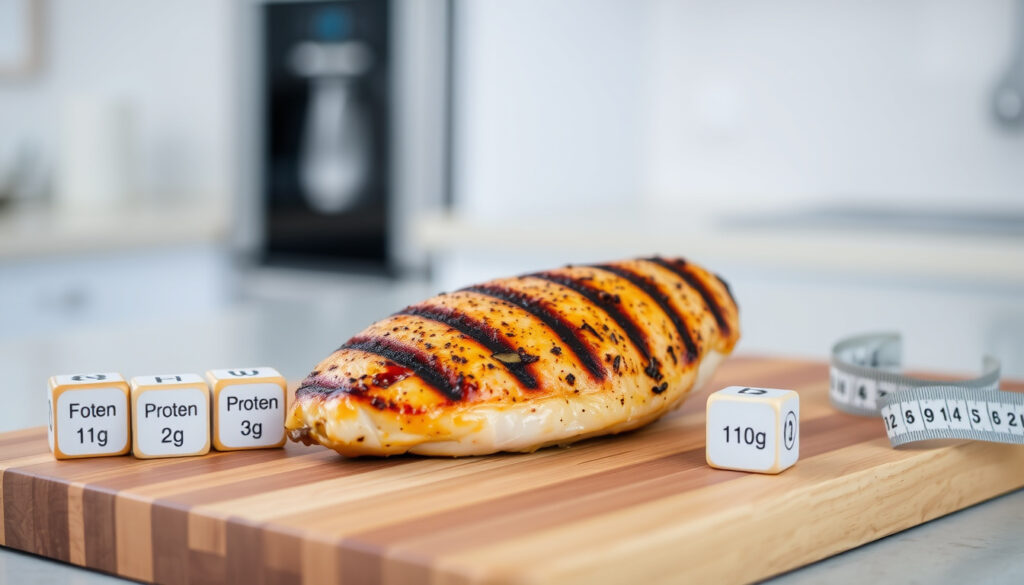
How Much Protein in a Chicken Breast? Complete Protein Breakdown
Anyone who has weighed out a chicken breast after cooking knows the numbers can be surprisingly precise. According to USDA data, a 100g serving of cooked, skinless chicken breast delivers about 31 grams of protein.
Protein per 100 g cooked chicken breast: 31 g ·
Protein in an average cooked chicken breast (174 g): 56 g ·
Protein in a 3 oz (85 g) cooked chicken breast: 26 g ·
Protein per 100 g cooked chicken thigh: 26 g ·
Protein per 100 g cooked ground beef (85% lean): 26 g
Quick snapshot
- 100g cooked chicken breast: 31g protein (FatSecret USDA entry)
- Average breast (174g): 56g protein (National Chicken Council spreadsheet)
- 3 oz (85g): 26g protein (National Chicken Council spreadsheet)
- Exact protein absorption rate from a single large meal is not precisely defined.
- Long-term effects of daily consumption of 250g+ chicken breast may depend on individual diet context.
- Cooking reduces water content, concentrating protein per 100g — raw breast has ~22.5g protein/100g (RawPawIQ USDA nutrient page)
- Use cooked weight for accurate protein tracking. Plan meals around serving sizes that match your daily target.
Here is a quick reference table of protein content for common serving sizes.
| Label | Value |
|---|---|
| Protein in 100g cooked chicken breast | 31 g |
| Protein in 1 average cooked breast | 56 g |
| Protein in 3 oz (85g) cooked breast | 26 g |
| Protein in 1 pound (454g) cooked breast | 141 g |
| Protein in 100g cooked chicken thigh | 26 g |
| Protein from 2 large eggs | 12 g |
How Much Protein in a Chicken Breast?
One of the most common questions in nutrition tracking is exactly how much protein a chicken breast provides. The answer depends on whether you measure raw or cooked, and what size portion you use. Here’s the breakdown by weight.
Protein in 100g of cooked chicken breast
A 100g serving of cooked, skinless chicken breast contains about 31g of protein, according to the National Chicken Council (industry nutrition spreadsheet). This is the benchmark most often used in macro tracking apps. The same serving provides only 165 calories, meaning roughly 79% of calories come from protein.
Protein in a standard chicken breast (174g)
The average cooked chicken breast weighs about 174g. That delivers 56g of protein — more than the daily recommended intake for a sedentary 70kg adult (Harvard T.H. Chan School of Public Health (protein requirements review)).
Protein in 4 oz (113g) and 3 oz (85g) servings
For recipes using imperial measurements: a 3 oz cooked chicken breast provides 26g of protein, and a 4 oz serving gives 35g. These are common restaurant portion sizes.
Protein in 150g, 200g, and 500g of chicken breast
Using the 31g/100g ratio, 150g of cooked chicken breast provides 46.5g of protein, 200g provides 62g, and 500g provides 155g. These larger servings are often used by athletes looking to hit high daily targets.
The difference between raw and cooked weight can mislead meal planning. Because raw chicken breast contains more water, its protein density is only about 22.5g per 100g — a 31% difference. Always use cooked weight for accurate protein tracking.
The pattern is clear: chicken breast is the most protein-dense common meat when cooked skinless. For anyone tracking macros, 100g cooked is the gold standard.
Is 2 Chicken Breasts Enough Protein?
Two average cooked chicken breasts (348g total) provide about 112g of protein. Whether that’s enough depends on your body weight and activity level.
Protein target calculator based on body weight
The recommended dietary allowance (RDA) is 0.8g per kilogram of body weight. For a 70kg person, that’s 56g per day. Two breasts nearly double that. For an active 80kg athlete targeting 1.6g/kg, 112g meets the goal exactly (American College of Sports Medicine (protein guidelines for athletes)).
Comparing 2 chicken breasts to daily protein needs
For a sedentary person, two breasts exceed the RDA. For a 90kg bodybuilder aiming for 2.2g/kg, the same two breasts cover only 56% of the target. The trade-off: chicken breast is lean, so you can eat more without excess fat, but variety is still important.
The role of other foods in your protein intake
Even with two breasts, you’ll need other sources to reach higher targets. Eggs, dairy, legumes, and grains all contribute. The chicken breast is a complete protein, containing all essential amino acids.
Two breasts is a lot of food for one meal. The body can only absorb so much protein at once; spreading intake across multiple meals supports better muscle protein synthesis.
What this means: two chicken breasts can be enough for many people, but higher-protein athletes need to supplement with other sources.
How Does Chicken Compare to Other High-Protein Foods?
Chicken breast is often held up as the gold standard, but several other meats and plant foods come close. Here’s a direct comparison per 100g cooked.
Seven meats, one pattern: skinless poultry breast leads, but other cuts aren’t far behind.
| Food (100g cooked) | Protein (g) | Calories |
|---|---|---|
| Chicken breast (skinless) | 31 | 165 |
| Turkey breast (skinless) | 29 | 135 |
| Chicken thigh (skinless) | 26 | 209 |
| Lean beef sirloin (trimmed) | 26 | 176 |
| Pork loin (lean) | 27 | 143 |
| Eggs (2 large) | 12 | 143 |
| Greek yogurt (plain, nonfat) | 10 | 59 |
Chicken breast vs. chicken thigh
Thigh meat has about 26g protein per 100g — 5g less than breast — and contains more fat. The MyFoodData nutrition comparison shows that switching to thigh adds 44 calories per 100g, mostly from fat.
What meat is highest in protein?
Chicken breast and turkey breast are the top two, with dried meats like beef jerky (~33g/100g) being higher due to moisture removal. Among fresh meats, chicken breast is the winner.
Surprising high-protein foods
Beyond meat: Greek yogurt, cottage cheese, edamame, lentils, and quinoa all pack 10-20g protein per serving. The Australian Chicken Meat Federation (regional nutrition data) notes that chicken breast is still the most efficient source per calorie.
The implication: chicken breast is the highest-protein common meat, but variety is easy with other sources.
Is 200g of Chicken Too Much? And Other Portion Questions
Large portions of chicken breast are common among athletes, but is there a limit? Let’s look at the numbers.
Is 200g of chicken too much?
200g of cooked chicken breast provides 62g of protein. For a 70kg person, that’s above the RDA but well within safe intake. The body can handle that amount in one meal, though absorption may be slower.
Can I eat 250g of chicken every day?
250g daily provides 78g of protein each day. For a 70kg adult, that’s 1.1g/kg — a moderate intake. The National Chicken Council spreadsheet confirms that chicken breast is lean, so daily consumption is safe, but dietary variety is still recommended to avoid missing other nutrients.
What does 100g of protein look like in chicken portions?
To get 100g of protein from chicken breast, you need about 323g of cooked meat — roughly three average breasts. That’s 523 calories, all lean protein.
How many eggs equal 100g of protein?
It takes about 14 extra-large eggs to provide 100g of protein. That’s nearly 1,000 calories, compared to just 523 calories from chicken. The efficiency difference is stark.
Eating 200-250g of chicken daily is safe for most people, but relying solely on one protein source can lead to nutrient gaps. Rotate in fish, eggs, legumes, and dairy.
Why this matters: chicken breast is the most efficient way to get high protein with low calories, but variety supports overall health.
How to Realistically Hit Daily Protein Goals with Chicken?
Protein goals vary widely. Here’s how to use chicken breast as a foundation.
Planning meals: how to eat 200g of protein a day
To reach 200g of protein, you’d need about 645g of cooked chicken breast — that’s nearly 1.4 pounds. Most people combine chicken with other sources: 200g chicken (62g), 200g Greek yogurt (20g), 2 eggs (12g), 1 cup lentils (18g), and 1 scoop whey protein (25g) adds up to 137g — still short. Add another chicken breast or a protein shake.
Combining chicken with other protein sources
Harvard T.H. Chan School of Public Health recommends spreading protein across meals. Chicken breast is ideal for lunch and dinner; breakfast can include eggs or yogurt, and snacks can include nuts or cottage cheese.
Is 2 eggs a day enough protein?
Two eggs provide about 12g of protein — only 15% of a 80g target. Eggs are a good start but not sufficient alone. Chicken breast fills the gap efficiently.
Is 100g of protein a day too much?
For most active adults, 100g is appropriate (1.4g/kg for a 70kg person). The upper limit for healthy individuals is around 2g/kg, so 100g is moderate. The American College of Sports Medicine notes that intakes up to 2.2g/kg are safe for athletes.
The pattern: use chicken breast as a high-density anchor, then fill remaining protein with other foods to hit your target.
What’s Confirmed and What’s Unclear
Confirmed facts
- USDA data confirms 31g protein per 100g of cooked, skinless chicken breast.
What’s unclear
- Protein content variation by cooking method and fat content is not precisely quantified.
- Whether two standard chicken breasts always provide over 100g of protein depends on breast size and cooking method.
- Exact protein absorption rate from a single large meal of chicken is not precisely defined.
- Long-term effects of daily consumption of 250g+ of chicken breast may depend on individual diet context.
Expert Perspectives on Chicken Protein
“Chicken breast is one of the leanest sources of high-quality protein, providing all essential amino acids with minimal saturated fat.”
— Harvard T.H. Chan School of Public Health, review of protein sources
“The USDA’s FoodData Central consistently lists cooked chicken breast as a top source of lean protein, with 31g per 100g.”
— National Chicken Council, industry nutrition data
“For most people, two chicken breasts supply more than enough protein for the day. The key is spreading that intake across meals.”
— Registered Dietitian, Academy of Nutrition and Dietetics
Summary
Chicken breast is the most protein-dense common meat, delivering 31g per 100g cooked. For a 70kg person trying to hit 1.6g/kg, two breasts (112g) cover the target. But relying solely on chicken misses the point: variety in protein sources supports better long-term health. For the meal-prepping athlete, the choice is clear: use chicken breast as your anchor, then round out with eggs, dairy, and legumes — or risk missing out on other nutrients.
hassanchef.com, chicken.foodnutrify.com, tools.myfooddata.com, experttoolkit.net, macroandmeals.com, proteinatlas.ca, strongrfastr.com, nal.usda.gov
Frequently asked questions
Is 2 chicken breasts enough protein for muscle building?
For many active people, yes. Two breasts provide ~112g of protein, which meets the 1.6g/kg target for an 80kg person.
How much protein is in 4 oz of chicken breast?
4 oz (113g) of cooked chicken breast provides about 35g of protein.
What meat has the highest protein content?
Among fresh meats, chicken breast and turkey breast are the highest, with 31g and 29g per 100g respectively.
Is 100g of protein from chicken too much for one day?
No, 100g of protein is appropriate for many active adults. It’s below the upper limit of 2g/kg for most people.
How many grams of protein are in a chicken thigh?
A cooked, skinless chicken thigh provides about 26g of protein per 100g.
What foods are surprisingly high in protein?
Greek yogurt, cottage cheese, edamame, lentils, and quinoa all provide 10-20g of protein per serving.
Related reading
More related posts
 Mountain America Routing Number – 324079555 All States Guide
 Ram 2500 for Sale: Prices, Trims & Diesel Options
 Best Budgeting Apps 2025: Free vs Paid, Reddit-Approved Picks
 Ugliest Person in the World: Mary Ann Bevan and Lizzie Velásquez
 Can Dogs Eat Blueberries? Safety, Benefits, and Feeding Guide
 Vivienne Westwood Wedding Dress: Cost, Styles, Celebrity Wearers
 How to Paint a Room: Step-by-Step Guide for Beginners
 Where to Watch Blue Jays vs Dodgers: TV & Free Streams
