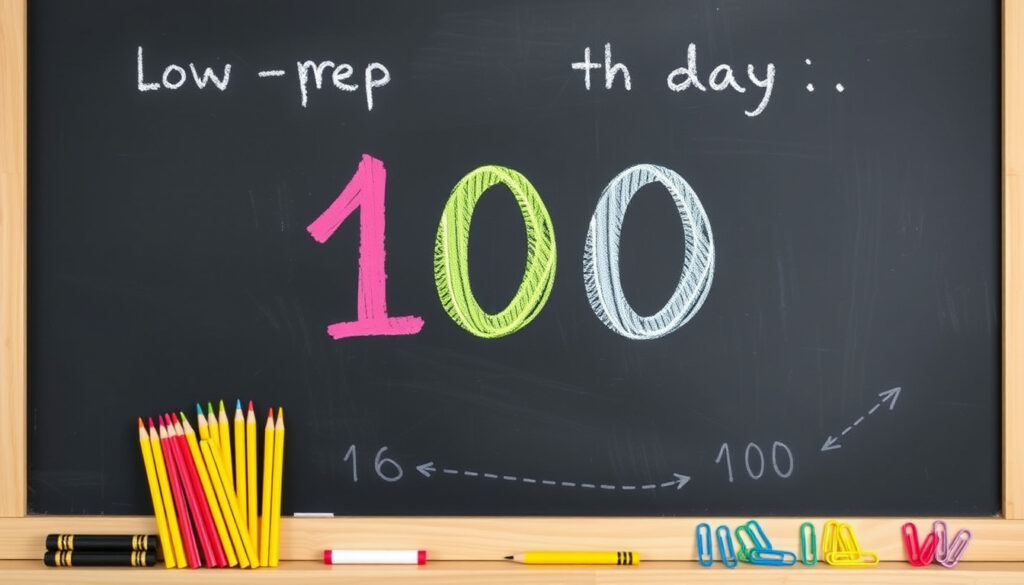
100 Days of School Ideas: Low-Prep Activities
Anyone who’s taught kindergarten knows the 100th day of school is a big deal and a bigger planning puzzle, marking a major math concept and a chance to celebrate progress. This guide cuts through the Pinterest overwhelm with low-prep, curriculum-aligned activities that keep students engaged and teachers sane.
Celebrated in most U.S. elementary schools: Yes ·
Typical month: February ·
Number of items collected: 100 ·
Common activities: Counting, crafts, dress-up, collections
Quick snapshot
- The 100th day is celebrated in many U.S. schools (Scholastic)
- Common activities include counting, collections, and crafts (Teacher Created Materials)
- Dress-up as a 100-year-old is a popular choice (Teach Starter)
- Exact date varies by school calendar
- Effectiveness of different activities on learning outcomes is not well documented
- Number of schools that celebrate exactly 100 days is unknown
- Teachers often incorporate math, reading, and art into the day
- Origin: 1970s, gained popularity in the 1980s
- Typical grade levels: Kindergarten to 2nd grade
- Estimated participation: Over 50% of U.S. elementary schools
- Many schools extend the celebration with 100-day projects (The Teacher’s Guide)
- Teachers can tie 100th day activities to ongoing math and literacy units (The Teacher’s Guide)
- Printable resources and templates are increasingly available online (The Teacher’s Guide)
How to plan your 100th day celebration
- Send a note home two weeks ahead with a clear list of suggested collection items and a backup bin of extras for children who forget.
- Choose 3–4 core activities that mix counting, movement, and creativity to keep math front and center.
- Prepare a backup bin of extra items (buttons, stickers, counting cubes) for students who come without a collection.
- Plan a simple dress-up or hat activity to build community without extra prep – a “100 days brighter” shirt works well.
Five key facts, one pattern: the 100th day is a flexible milestone that works across grade levels with minimal prep.
| Fact | Details |
|---|---|
| Origin of 100th day tradition | 1970s, gained popularity in the 1980s |
| Typical grade levels | Kindergarten to 2nd grade |
| Estimated participation | Over 50% of U.S. elementary schools |
| Most common activity | 100-item collection |
| Average preparation time | 15–30 minutes per activity |
What can I do for 100 days of school?
Classroom counting activities
- String a necklace with 100 beads or pasta pieces (Scholastic)
- Fill in a hundreds chart, count by 1s, 5s, and 10s (Teacher Created Materials)
- Build a tower with 100 cups — a classic engineering challenge
- Create a 100-dot artwork using a paint dauber or stickers
Hands-on projects
- Make a Froot Loop necklace of 100 pieces (KindergartenWorks)
- Assemble a 100-item collage on a poster board (Pre-K Pages)
- Create a 100-piece puzzle or mosaic
- Design a “100 days brighter” T-shirt using fabric markers
Dress-up and costume ideas
- Dress like a 100-year-old (glasses, gray hair, cane) (Teach Starter)
- Wear a “100 days brighter” shirt with 100 stickers
- Make a 100th day hat numbered from 1 to 100
- Create a “Team 100” jersey with a number 100
Community service projects
- Collect 100 food items for a local food bank
- Write 100 thank-you notes to school staff
- Plant 100 seeds or bulbs in the school garden
- Make 100 cards for a nursing home
Math and literacy centers
- Flip a coin 100 times and graph the results (TeachersFirst)
- Weigh 100 small items and compare with classmates’ collections (The Teacher’s Guide)
- Read a book about 100 (e.g., 100 Hungry Ants)
- Write a 100-word story about what the class has learned
Teachers can mix low-prep activities like counting beads with high-engagement ones like dress-up. The key is to keep the math front and center — the 100th day is a natural opportunity to reinforce number sense without extra drilling.
This combination ensures both learning and celebration.
What activities are done on the 100th day?
Counting activities
- Count by 1s, 5s, and 10s to 100 using a hundreds chart
- Count 100 steps from the classroom to the playground
- Estimate and then count 100 objects (e.g., how many gumballs fill a jar?)
- Count by 100s to 10,000 as an extension (TeachersFirst)
Collection projects
- Bring 100 small items from home (buttons, stickers, Legos) (Pocket of Preschool)
- Sort collections by color, size, or type
- Weigh collections using a classroom scale (The Teacher’s Guide)
- Create a 100-item poster showing the collection in groups of 10
Dress-up day
- Dress as a 100-year-old (popular among kindergarten and first grade)
- Wear 100 of something (e.g., 100 stickers on a shirt, 100 paper clips on a necklace)
- Make a 100th day crown with 100 dots or numbers
- Host a “100 days brighter” parade around the school
100th day snack
- Mix 10 each of 10 different snack items (pretzels, raisins, cereal, etc.)
- Use a 100-day snack mat with 10 frames to count
- Make a 100 gumball machine using a paper plate and colored pom-poms
- Enjoy a 100th day cookie decorated with 100 sprinkles
100th day certificates
- Print certificates that say “I survived 100 days of school”
- Include a photo of the child holding their 100-item collection
- Award special 100th day pencils or stickers
- Create a class book: “100 Days of Learning” with a page from each student
The pattern: most activities require only common classroom materials — markers, paper, counting cubes, and snack items. Teachers don’t need to buy anything special.
What are good 100 days collection ideas?
Household items collections
- 100 buttons, 100 bottle caps, 100 pennies (Scholastic)
- 100 paper clips, 100 rubber bands, 100 toothpicks
- 100 stickers on a poster board
- 100 puzzle pieces from a single puzzle
Nature collections
- 100 leaves, 100 acorns, 100 pebbles
- 100 flower petals pressed between wax paper
- 100 sticks for a counting activity
- 100 seeds (e.g., sunflower seeds, pumpkin seeds)
Toy collections
- 100 Legos (count and sort by color)
- 100 toy cars, 100 action figures, 100 building blocks
- 100 marbles in a jar
- 100 small dolls or toy animals
Food collections
- 100 cereal pieces (e.g., Froot Loops, Cheerios)
- 100 jelly beans — guess the weight and then weigh them (TeachersFirst)
- 100 raisins, 100 pretzel sticks
- 100 goldfish crackers for a snack mix
Literacy-based collections
- 100 words from a favorite book
- 100 letters cut from magazines
- 100 sight words written on index cards
- 100 pictures from a printed coloring page
Collections are the most common activity, but they can overwhelm parents if not communicated in advance. Send a note home two weeks ahead with a clear list of suggested items — and a backup bin of extras for children who forget.
This ensures that all students can participate regardless of home resources.
What is the 100th Day project?
What is a 100-day project?
A 100-day project is a creative challenge to do something every day for 100 days. It can be art, writing, fitness, or any repeated activity. In schools, the 100th day project often involves a long-term collection or creation that culminates on the 100th day.
Choosing a project
- Pick a project that aligns with current curriculum (e.g., a 100-word journal, 100 drawings, 100 photos)
- Keep it simple: a 100-day art journal requires only a notebook and a pencil
- Involve families: parents can help track daily progress
- Set a low bar: consistency matters more than quality
Daily commitment
- Spend 5–10 minutes per day on the project
- Use a 100-day tracker (a grid of 100 squares) to mark each day
- Celebrate small milestones: day 25, 50, 75
- Share the project with the class once a week
Examples of 100-day projects
- 100-day photo project: take one photo each day and compile them
- 100-day writing challenge: write one sentence each day for 100 days
- 100-day fitness log: do 10 jumping jacks each day for 100 days
- 100-day art project: create one small drawing each day
- 100-day collection: add one item to a collection each day
Tips for success
- Make it visible: keep the project in a prominent place
- Pair it with a partner: class buddies can motivate each other
- Use a digital tool: a simple Google Form or a class blog to track
- Celebrate the end: a 100th day party with certificates and snacks
The pattern: consistency and visibility are key to completing a 100-day project.
What are some 100 day challenge ideas?
Productivity challenges
- Read for 100 minutes over the 100 days
- Write 100 steps in a story (collaborative class story)
- Complete 100 math problems (range of difficulty)
- Learn 100 new words (vocabulary building)
Fitness challenges
- Do 100 jumping jacks (break into sets of 10)
- Hold a 100-second silence challenge
- Walk 100 steps around the playground
- Do 100 stretches (10 each of 10 different stretches)
Creative challenges
- Write a 100-word poem
- Draw 100 small pictures on a single sheet
- Build a 100-piece structure using blocks
- Create a 100-second video
Academic challenges
- Memorize 100 sight words
- Solve 100 addition problems
- Read 100 pages across the 100 days
- Write 100 letters of the alphabet (uppercase and lowercase)
School-wide challenges
- 100-day kindness challenge: do 100 kind acts
- 100-day recycling challenge: collect 100 recyclable items
- 100-day reading challenge: every class reads 100 books
- 100-day fitness challenge: track physical activity across the school
The implication: 100-day challenges work best when they are simple, measurable, and tied to existing routines. Teachers can customize them to fit their grade level and available time.
“Making a Froot Loop necklace of 100 pieces is a celebratory activity that combines counting and fine motor skills.”
“Flipping a coin 100 times and graphing heads and tails is a math-rich celebration activity that teaches probability in a fun way.”
“Have each child bring 100 small items from home — stickers, toothpicks, buttons — and sort them into groups of 10 on a poster.”
Reddit user in r/kindergarten (as compiled by Pocket of Preschool)
For teachers in U.S. elementary schools, the 100th day is too valuable to skip — but it doesn’t have to be exhausting. Focus on the core few activities that build number sense and community, and leave the Pinterest-perfect projects for optional fun. Teachers can achieve a low-prep, high-celebration day that beats an elaborate plan that never gets off the ground.
peachtreebooks.com, upandawayinprek.com, lessons4littleones.com, blikebianca.com
Frequently asked questions
What is the best 100th day snack?
The most popular 100th day snack is a mix of 10 different items (e.g., 10 pretzels, 10 raisins, 10 cereal pieces) to make 100 pieces total. Use a 10-frame mat to count each group.
How to organize a 100th day parade?
Have each class create a banner or sign featuring 100 of something (stars, handprints, stickers). Then parade through the school hallways, stopping at each classroom to show off the creations.
What to do if you missed the 100th day?
If your school calendar doesn’t align with 100 days, celebrate on the closest convenient day. Many schools hold the celebration on a Friday near the actual 100th day. You can also count the number of days you’ve been in school and celebrate that number instead.
How to involve parents in 100th day?
Send a note home two weeks before explaining the 100-item collection project. Ask parents to help children gather items and count them. Also invite parents to volunteer during the celebration — helping with snack stations, photo booths, or the parade.
Can 100th day be celebrated virtually?
Yes. Use a video call to show collections, do a digital 100 chart, or play a 100-day trivia game. Send home a 100th day activity kit with a snack mix, a crown template, and a certificate.
What are 100-day writing prompts?
Prompts include: “If I had $100, I would…”, “I wish I had 100…”, “100 days from now, I will be…”, “Name 100 things you love about school.” Use these for a collaborative class book.
How do I choose activities for different grade levels?
For Pre-K and kindergarten, focus on counting and sorting activities. For first and second grade, add writing and math challenges. For upper elementary, incorporate problem-solving, graphing, and longer projects.
What are the easiest no-prep activities?
The easiest: count to 100 as a class, do 100 jumping jacks, make a list of 100 things you like, or draw 100 small circles on a paper. These require zero materials and take 5 minutes.
More related posts
 John B Outer Banks: Actor, Age, Plot & Relationships
 How to Check Mastercard Gift Card Balance – Step-by-Step Guide
 Free VPN for iPhone: Does a 100% Free Option Exist
 AMD Ryzen 7 7800X3D – Gaming Review and Benchmarks
 What Is Income Tax? Meaning, Calculation & Guide for Ireland 2025
 Mission Lane Credit Card: Fees, Limits & Worth
 Saoirse-Monica Jackson: Bio, Dyslexia & New Projects
 Cluster B Personality Disorders – Types, Symptoms, Causes, Treatment
